Back to builds

Build Log

Bleriot XI

completed Scale: 1:10 Amati View gallery →

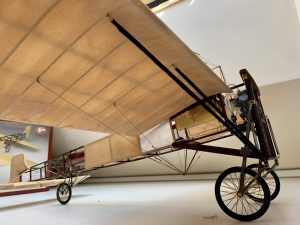
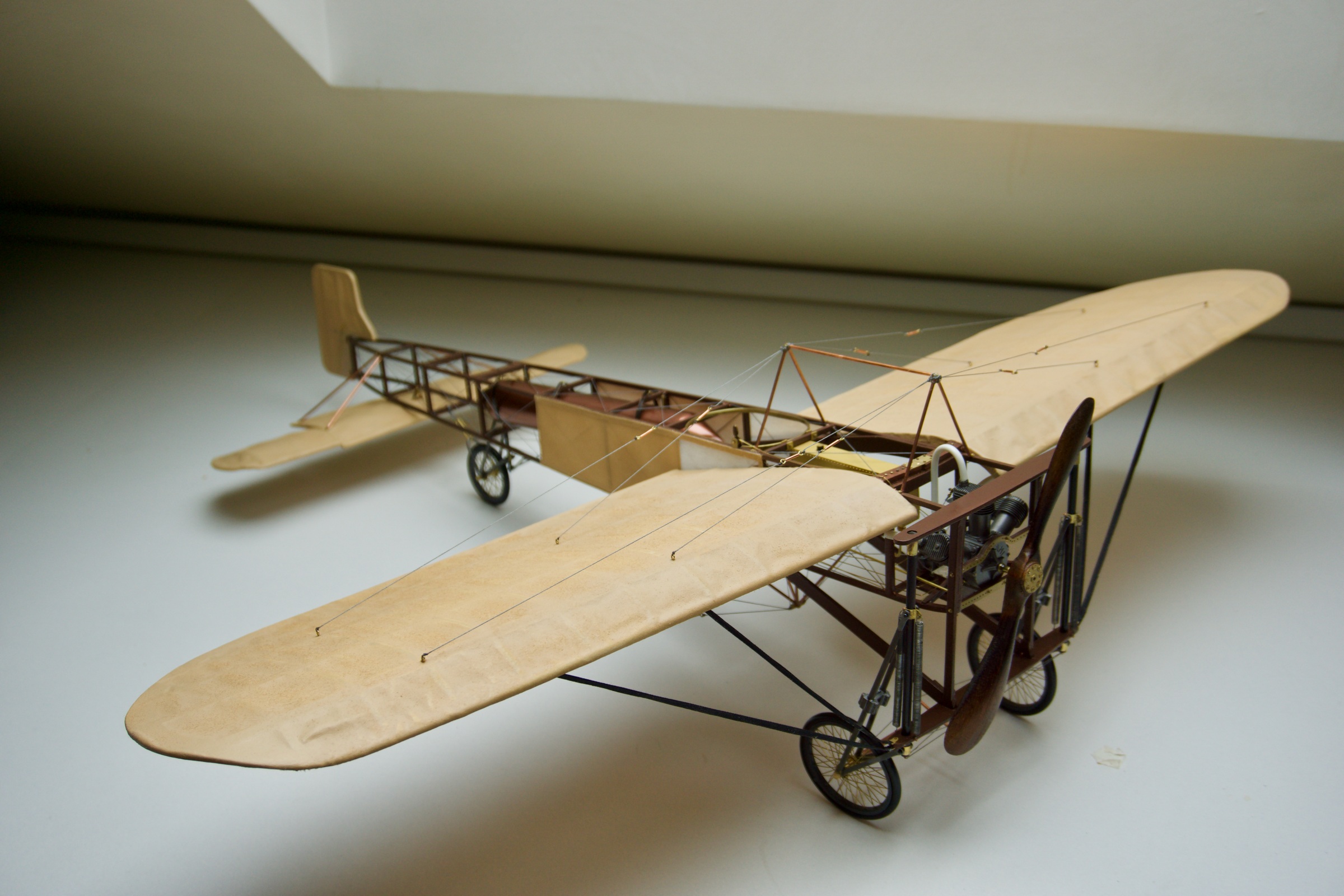
This model represents the Blériot XI as a fragile early monoplane, with finely detailed wooden structure, wire bracing, and fabric surfaces capturing its appearance at the time of the 1909 Channel crossing.

Bleriot XI

Historical Background

Blériot XI was a pioneering early French monoplane designed by Louis Blériot, famous as the first aircraft to make a successful flight across the English Channel in 1909.

Introduced in 1909, the Blériot XI featured a lightweight wooden frame, fabric-covered wings, and a tractor propeller driven by a small piston engine, giving it a delicate but functional appearance typical of the earliest generation of practical airplanes. It achieved lasting fame on 25 July 1909, when Louis Blériot flew it from Calais to Dover, proving that controlled powered flight could link countries separated by sea and dramatically boosting public and military interest in aviation. In subsequent years the type was built in several variants, used for training, demonstrations, and even early military reconnaissance, making it one of the most influential and recognizable aircraft of the pre–World War I era.

Build Log

Part 1

08.05.2023

Woodworking

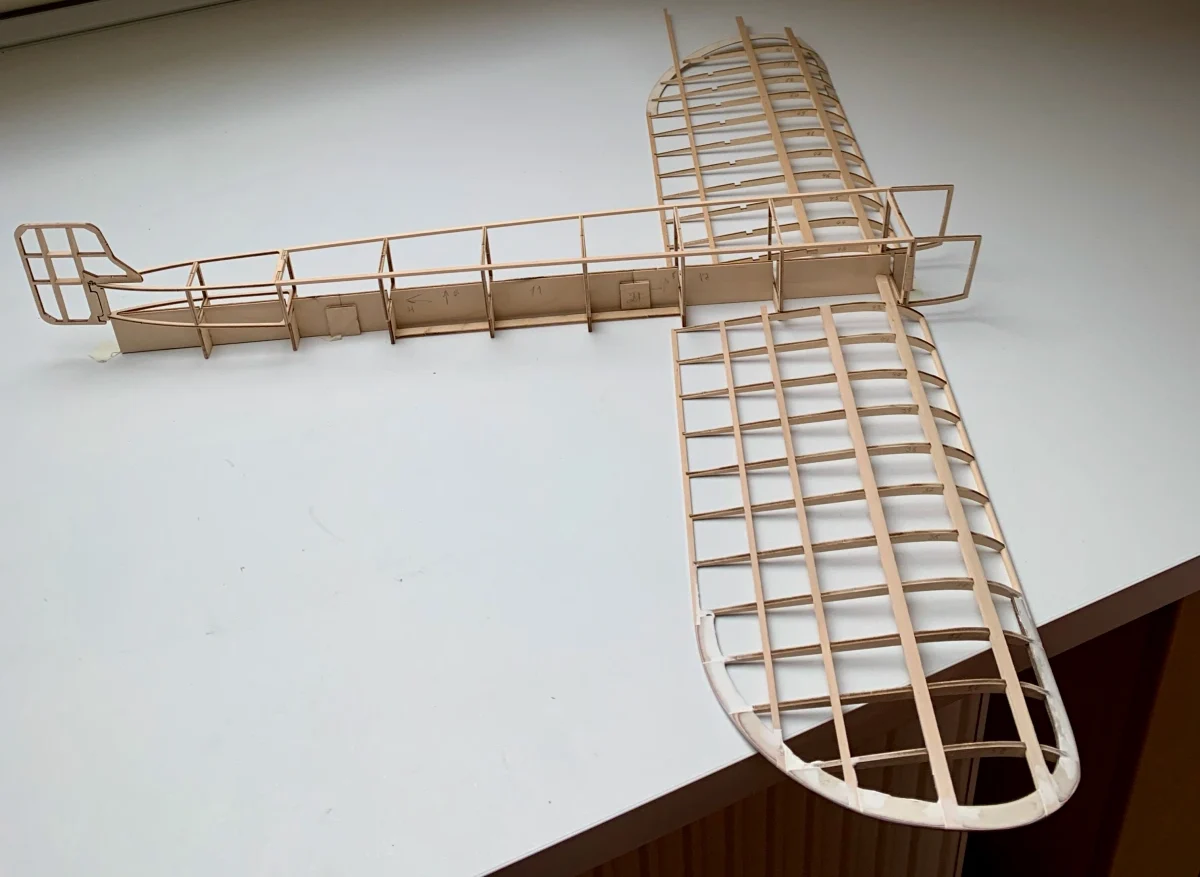
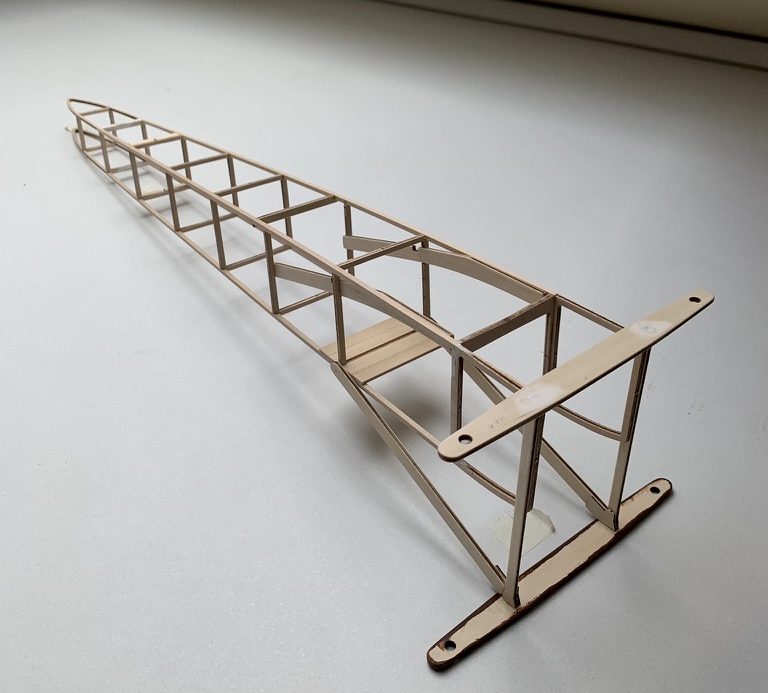
Construction of the model begins with careful preparation of the wooden fuselage frame and the landing gear support elements. Most of parts in the kit are laser–cut, so out of the box they have very precise geometry but still require a bit of refining. I gently remove the bevels and characteristic laser burn marks with fine sandpaper and sanding blocks so that the parts fit more tightly at the joints and look more “alive” and less like a toy once assembled.
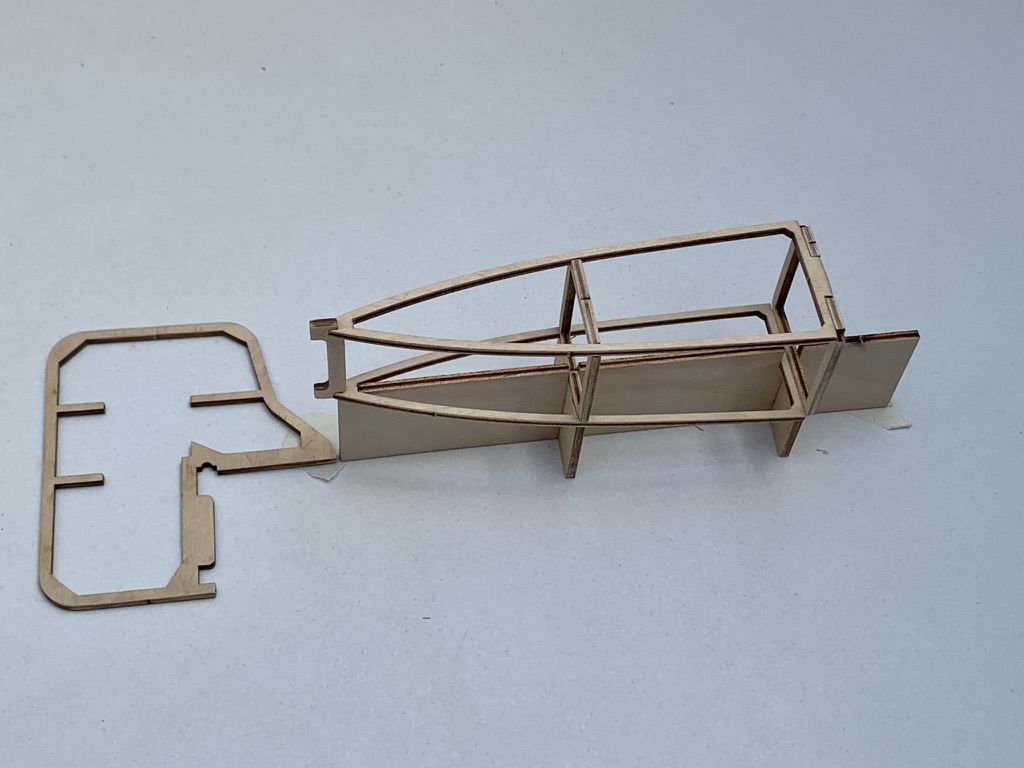
Special attention goes to the long fuselage trusses. There is no point in gluing them “in the air”: even the slightest twist will inevitably show up later when the wings are installed and the rigging is tensioned. That is why I use a simple plywood jig with stops aligned to the drawings, which firmly fixes the beams in both height and width. This not only makes assembly easier but also gives confidence that the entire structure will remain straight and geometrically correct right up to the end of the project.
↑ Back to all parts

Part 2

29.07.2023

Detailing and painting

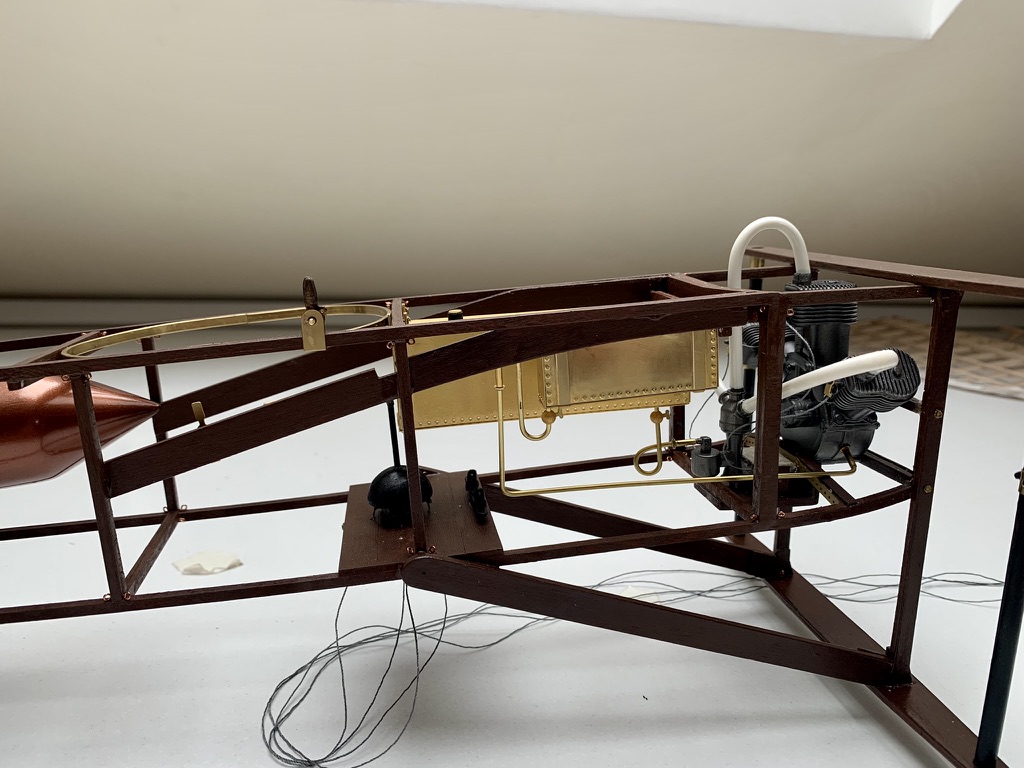
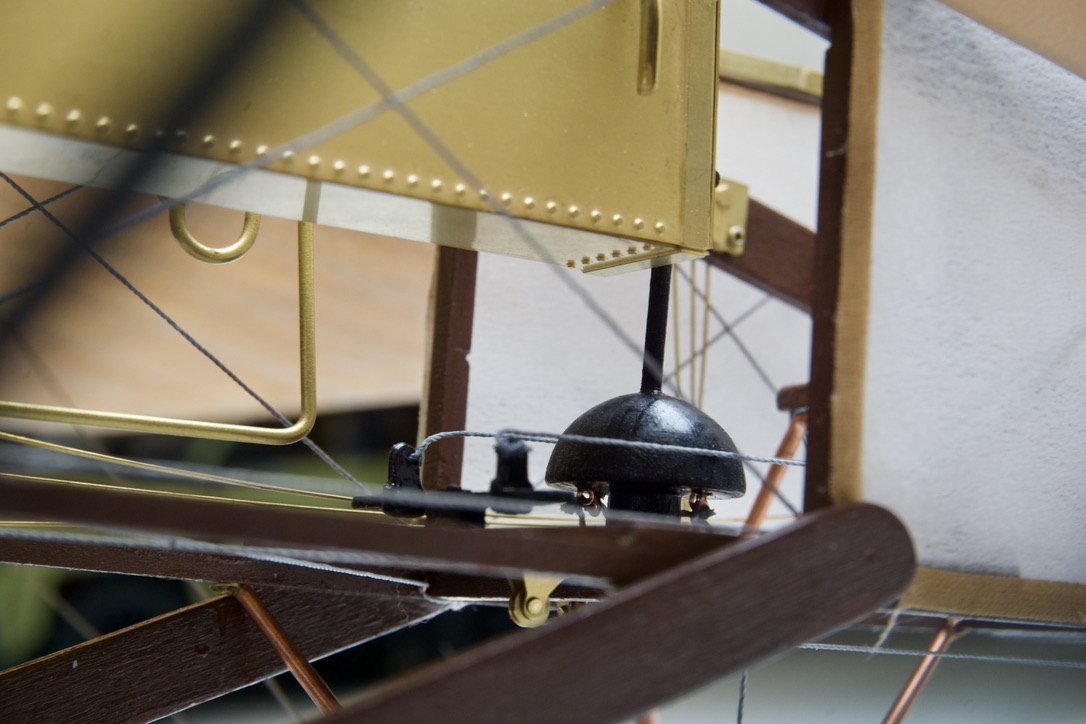
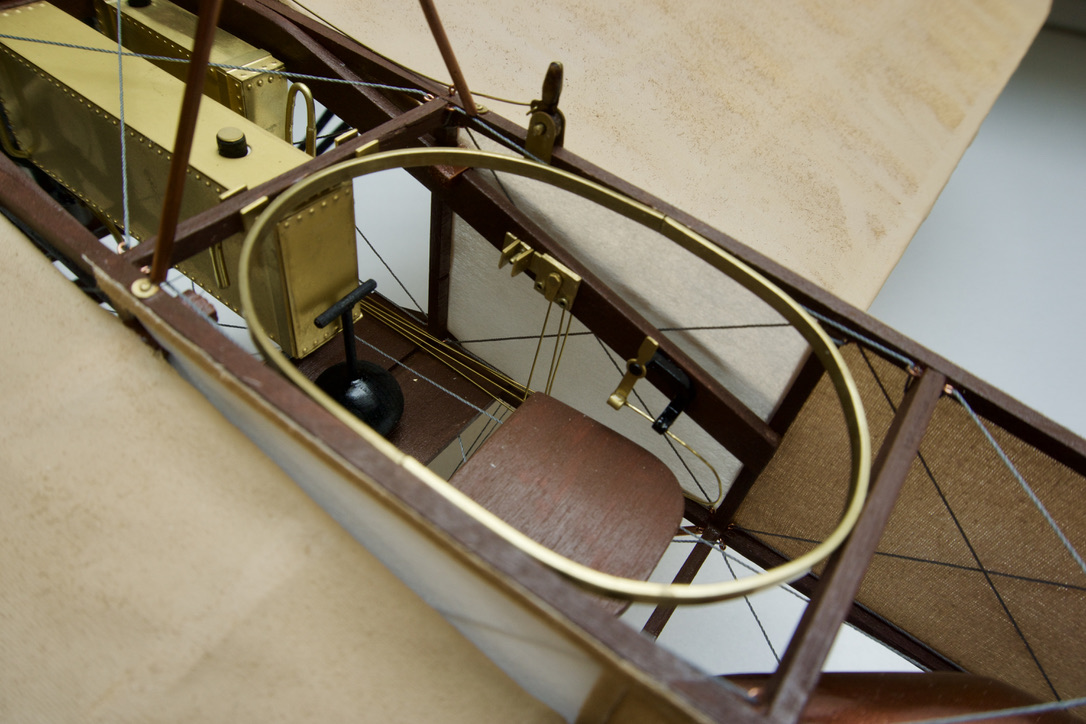
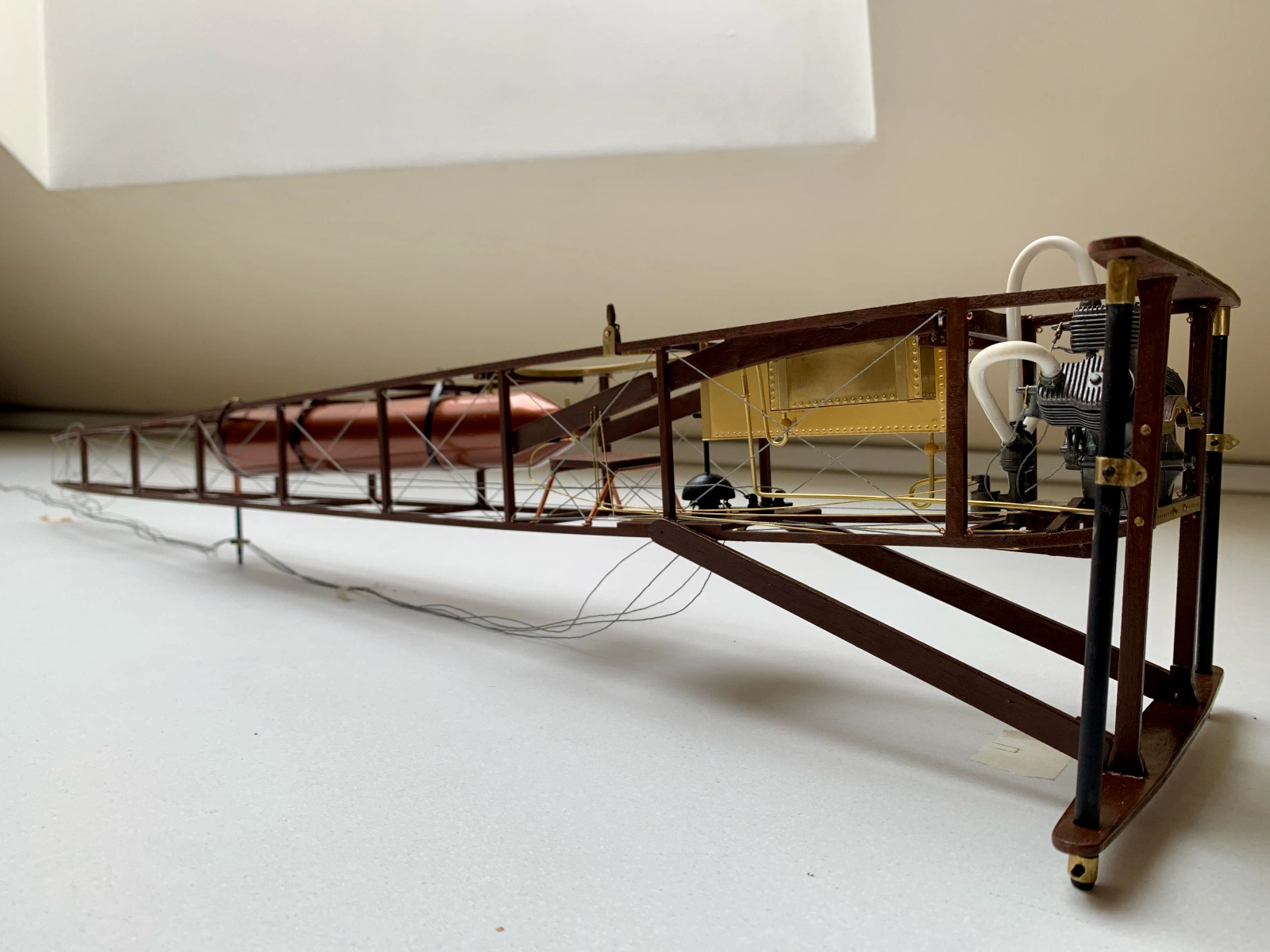
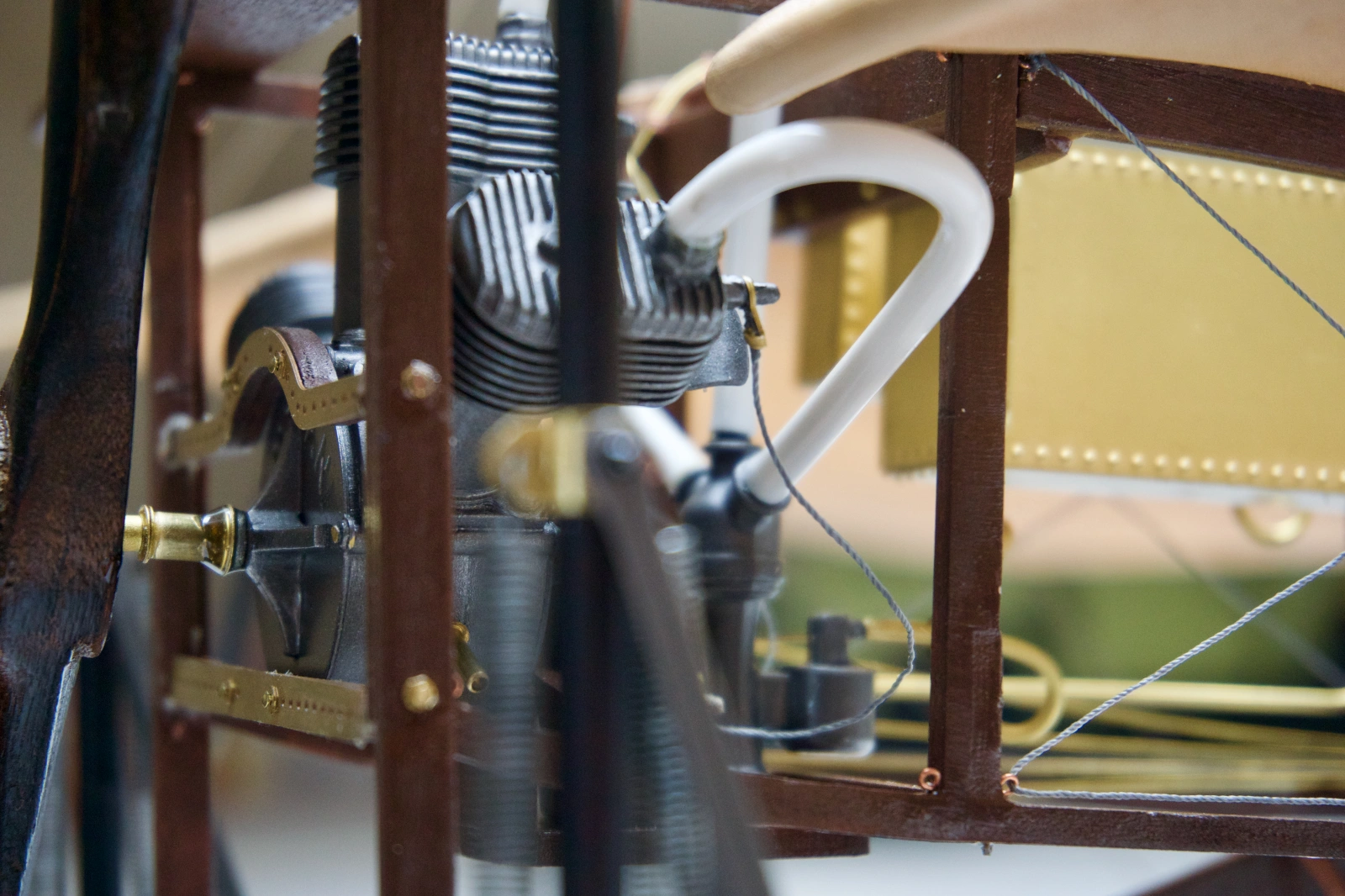
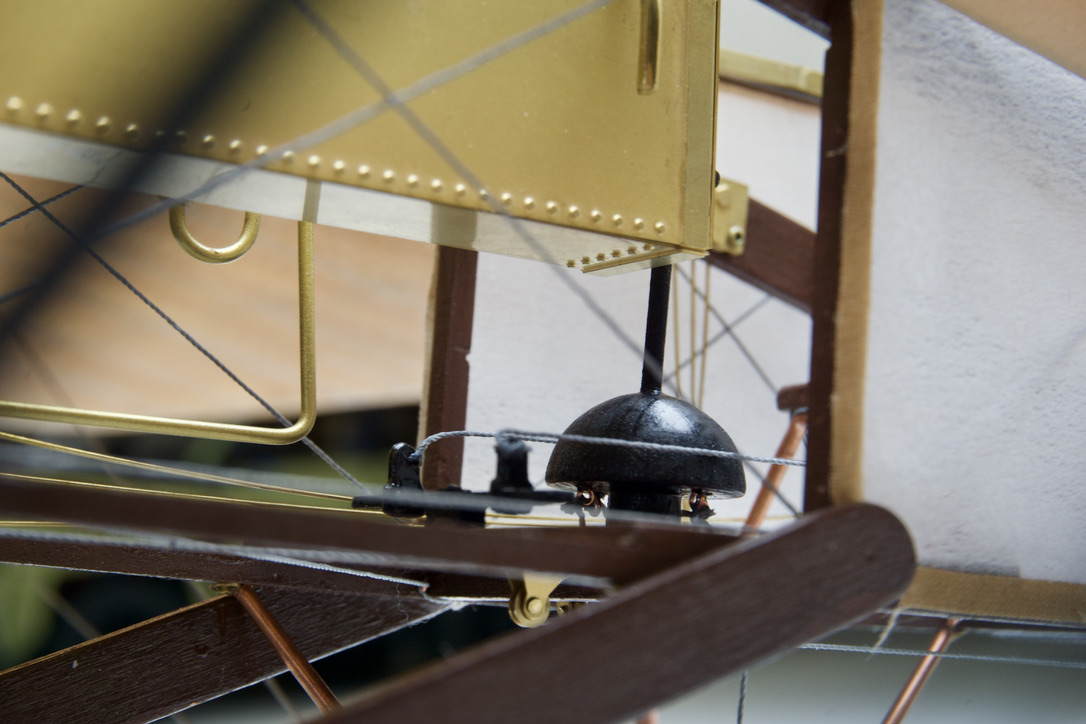
The Blériot XI is an open aircraft, so every small detail of the engine, fuel system, and control linkages remains exposed and needs careful refinement. At this scale, any inaccuracy immediately stands out, so I try to dry-fit the parts as precisely as possible before moving on to painting and final assembly.

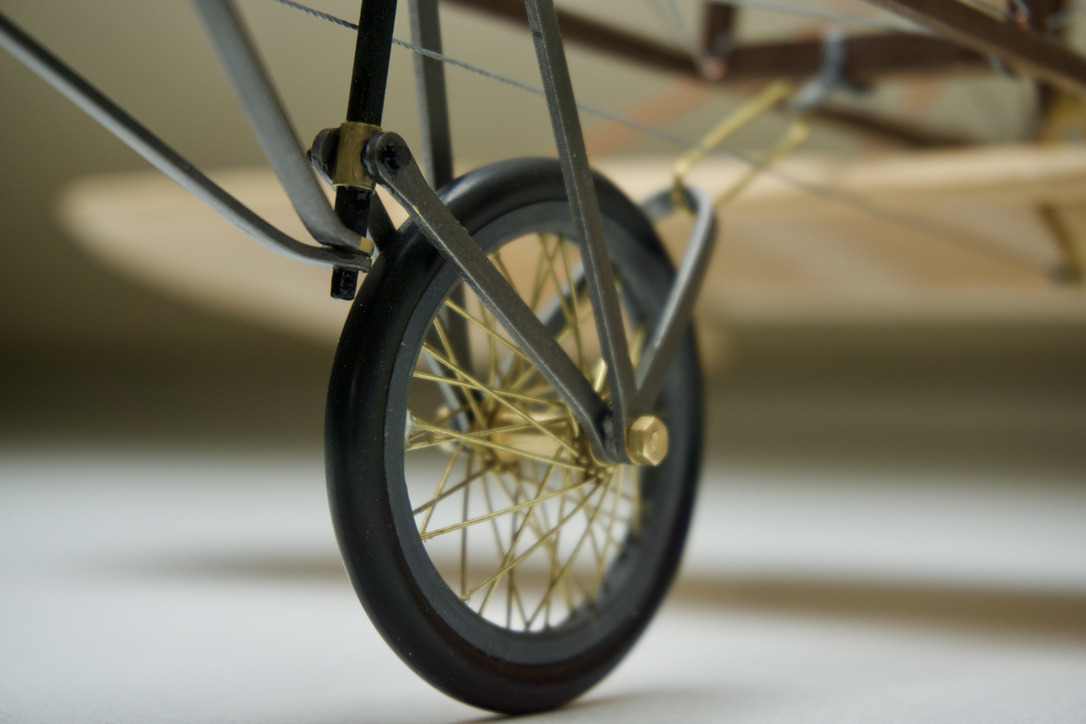
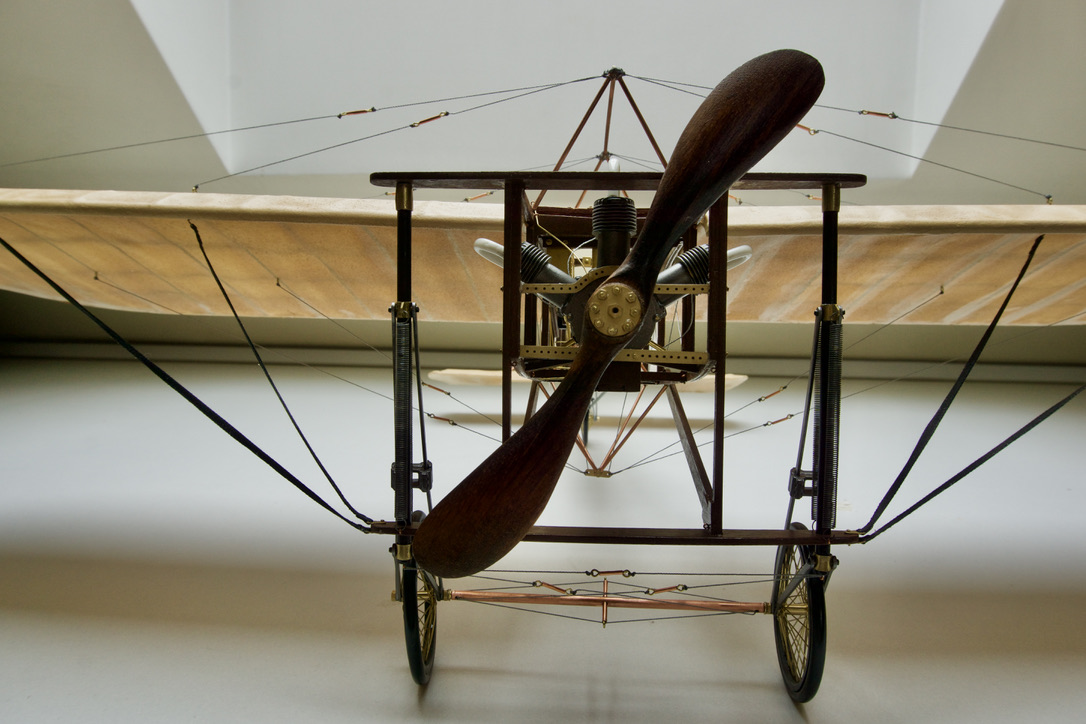
The metal parts in the kit – photo-etched and cast pieces – really come to life after priming and a base coat in grey or almost black tones.

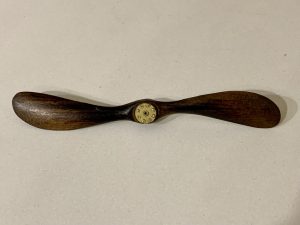
With the wooden propeller in this kit things are simpler: it is already finished, and all I have to do is make the hub and carefully install it on the model. Once the hub and propeller are assembled together, the front of the aircraft immediately starts to look complete.

For the main colour of the fuselage I chose brown – it nicely emphasizes the wooden nature of the structure and contrasts with the metal parts of the engine and landing gear.

↑ Back to all parts

Part 3

13.08.2023

Wings

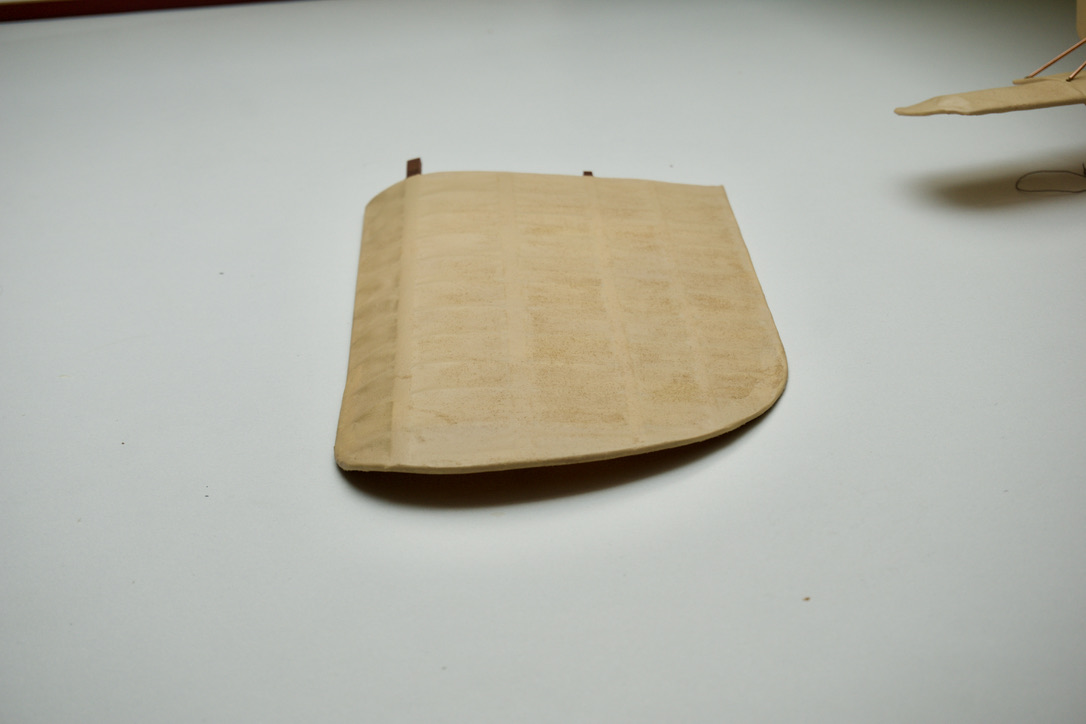
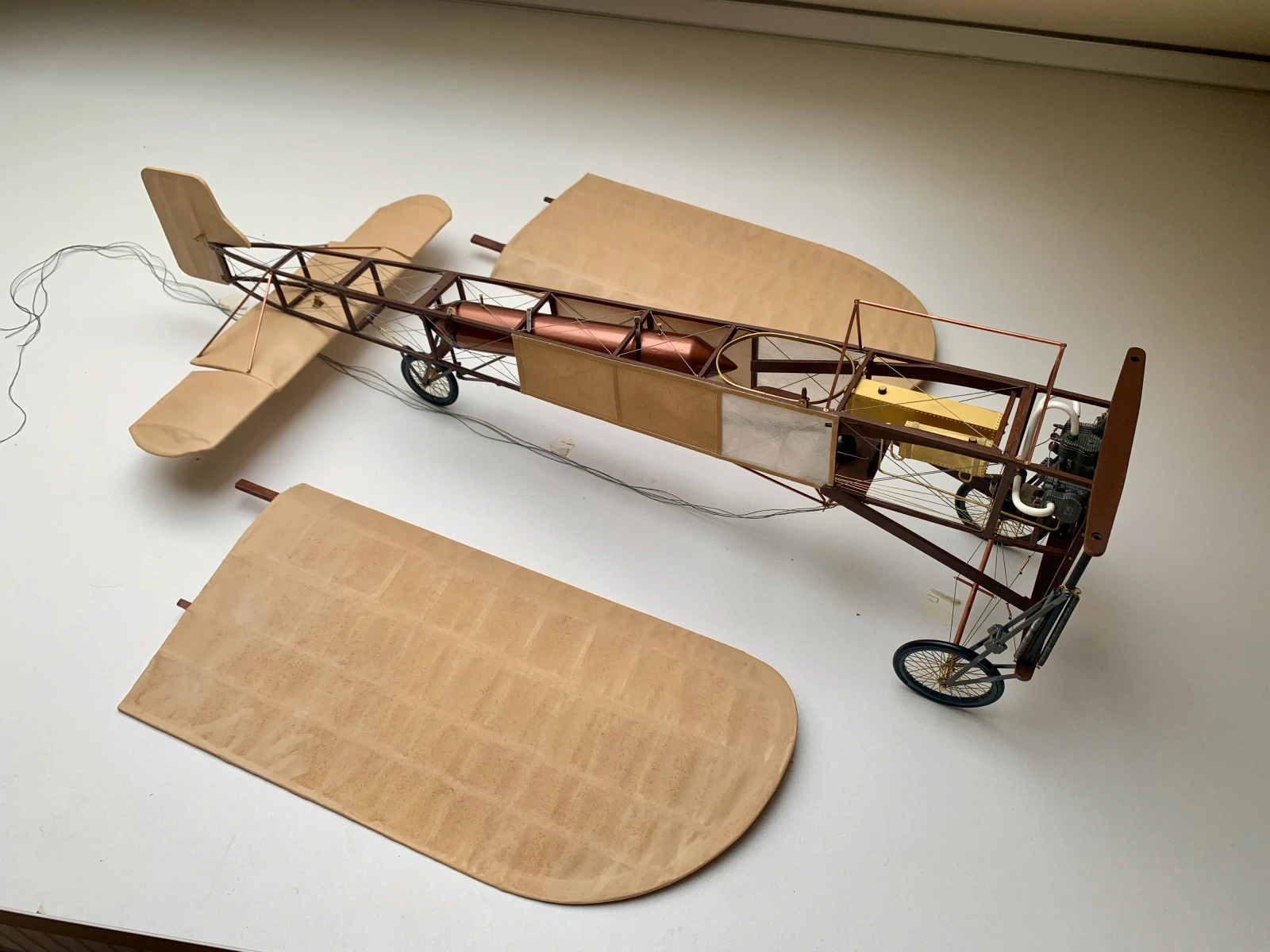
The wing of the Blériot XI is built around a light wooden structure of spars and ribs with a fabric covering on top, and this construction is very convincingly reproduced in the Amati kit. Already at the dry-fit stage it is important to keep the incidence of both wing panels identical and to achieve perfect symmetry before covering; later it will be almost impossible to correct the geometry. I assemble the framework on a flat board over the printed plan, fixing each rib strictly perpendicular to the wing plane and regularly checking the diagonals to avoid any twist.

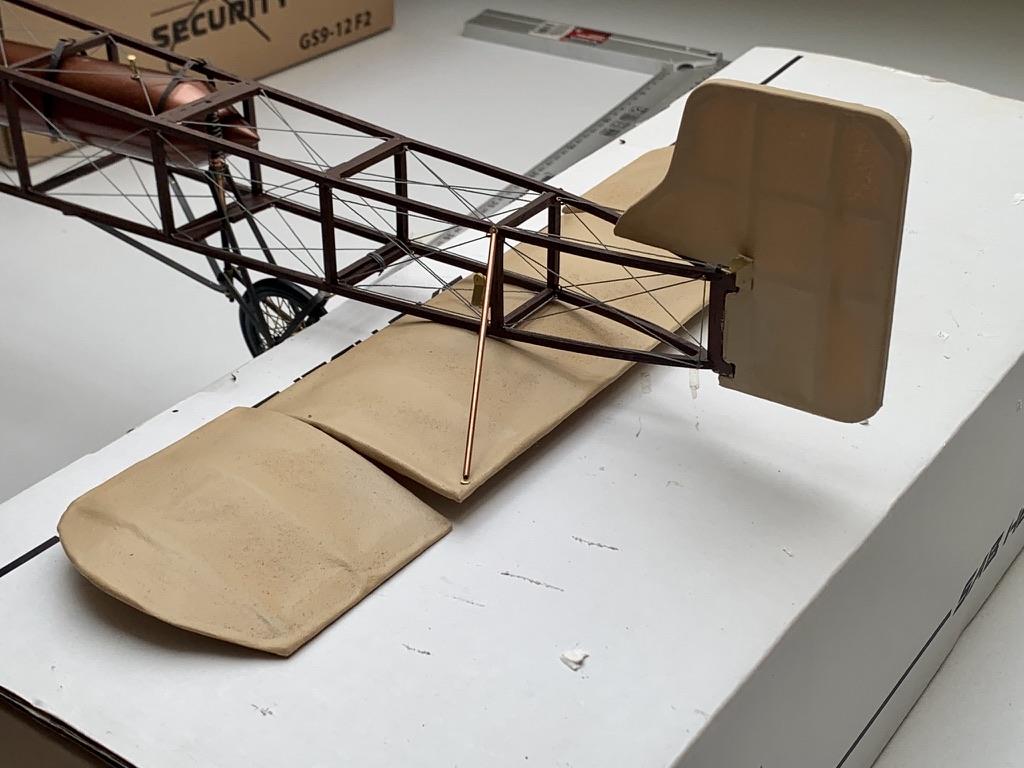
It is more convenient to cut the fabric covering in advance with a small allowance and then carefully stretch it over the spars and ribs. As I tension the fabric, I simultaneously impregnate it with aircraft dope (emalite), just as it was done on real aircraft of that era. This helps the material to conform to the geometry of the framework, tighten up, and embrace all structural elements. For the final colour of the wings, I go with a soft “antique” beige‑cream tone: it allows the internal structure to show through slightly and creates the impression of real fabric stretched over the wooden frame of an early monoplane.

↑ Back to all parts

Part 4

26.08.2023

Final touches

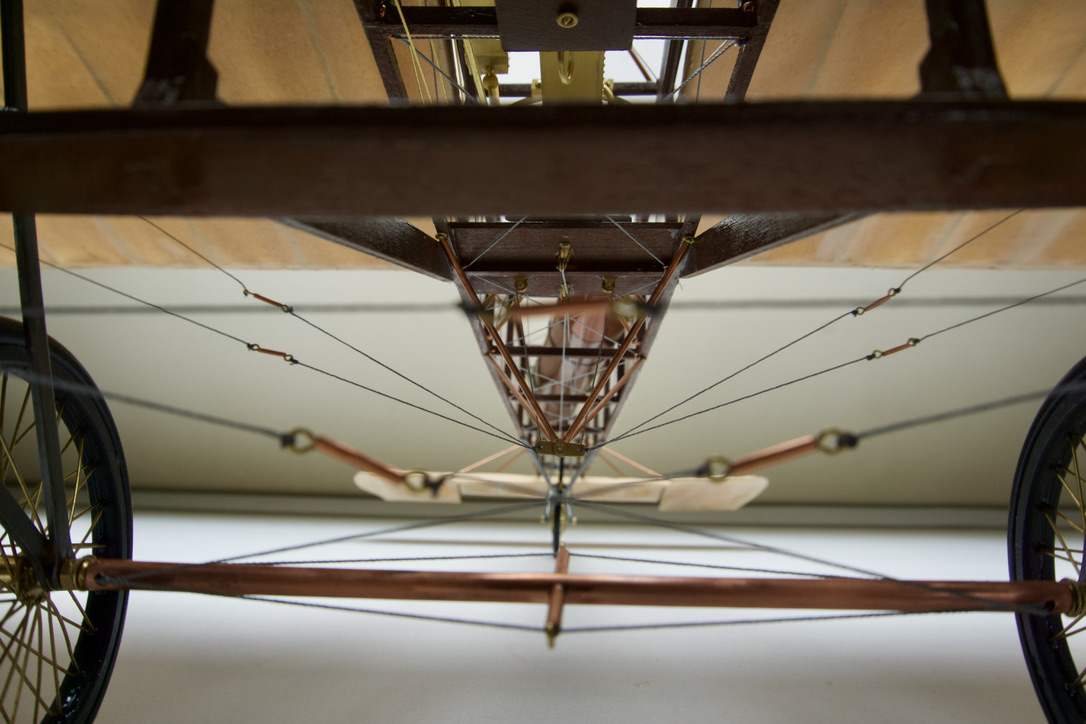
The final stage of building the Blériot XI is all about tuning the whole “orchestra” of rigging wires, control cables, and small details that finally turn a neat set of parts into a living model of a historic aircraft. At this point the overall geometry really shows itself: the landing gear struts are set and firmly fixed, the position of the wing relative to the fuselage is adjusted, and then the wire and thread rigging is brought into play. I try to tension them with a light but noticeable preload so that they not only look good visually, but also structurally “hold” the model, giving it the necessary stiffness.


Working from the centre outwards proves to be a very effective approach. First I install and tension the main structural bracing wires, which define the basic geometry of the “fuselage–wing–landing gear” assembly. Only after that do I move on to the finer “music” of the control cables for the wing‑warping system, as well as the rudder and elevator. When all the lines fall into place, the Blériot XI seems to come to life: in this web of fine cables and rigging there appears that fragile yet very expressive mechanics of early aviation, which is exactly what makes you want to build a model like this in the first place.

↑ Back to all parts

Project Specs

Model
Bleriot XI
Scale
1:10
Manufacturer
Amati
Length
800 mm
Historical Year
1909
Total Parts
4
Status
completed