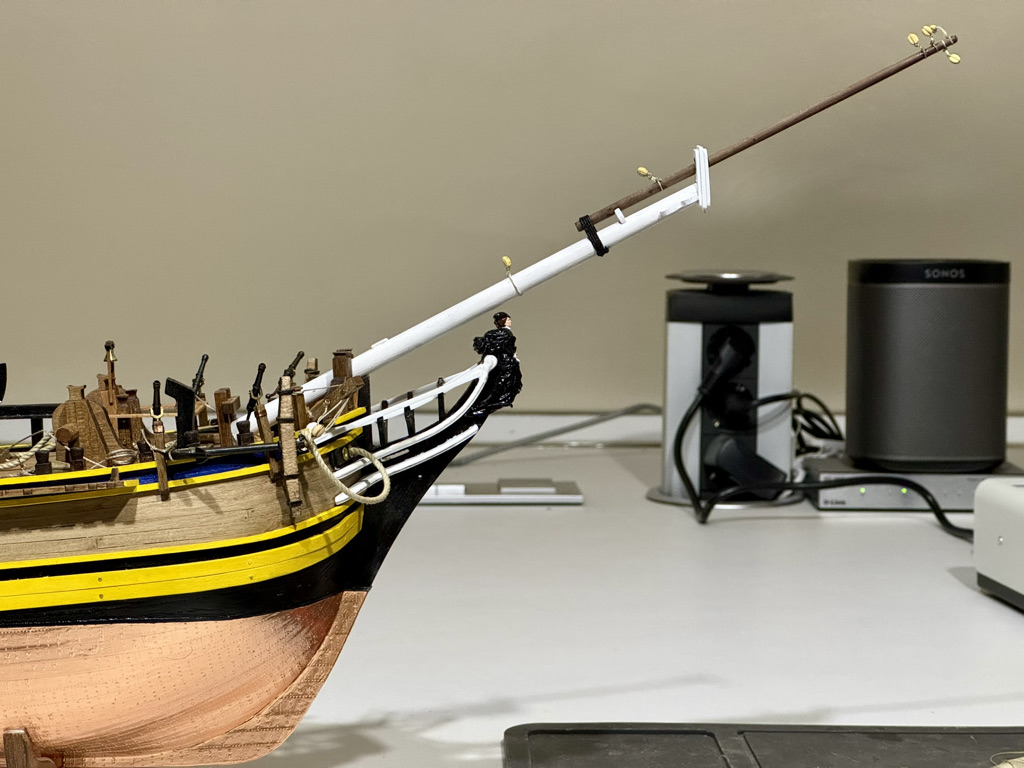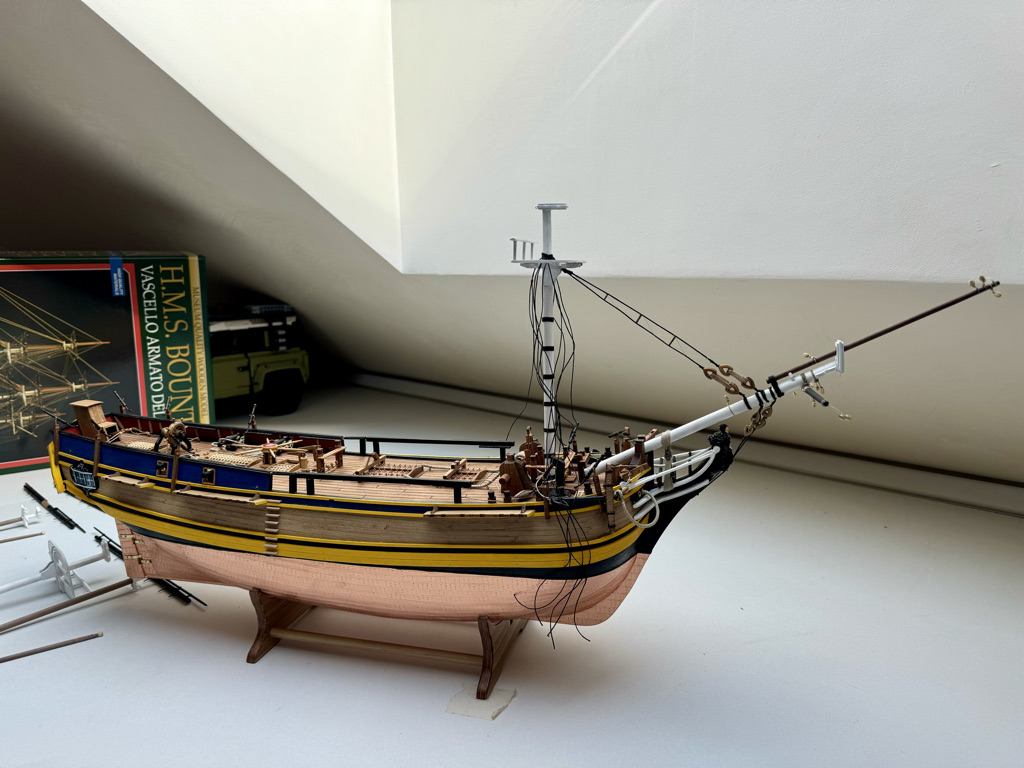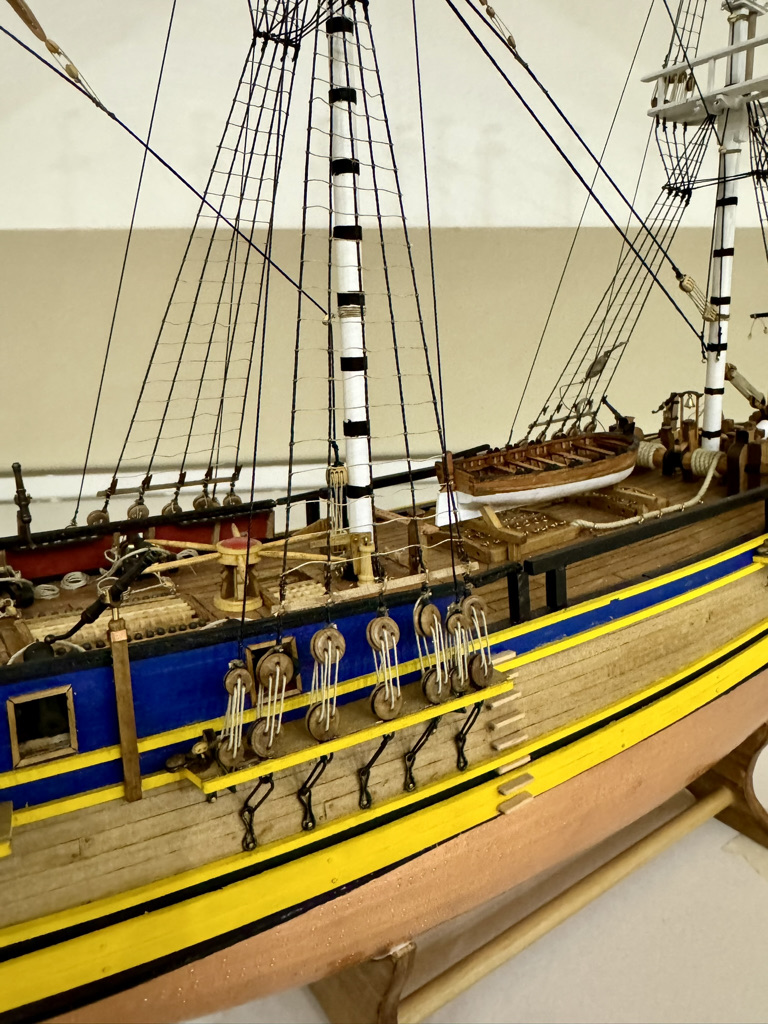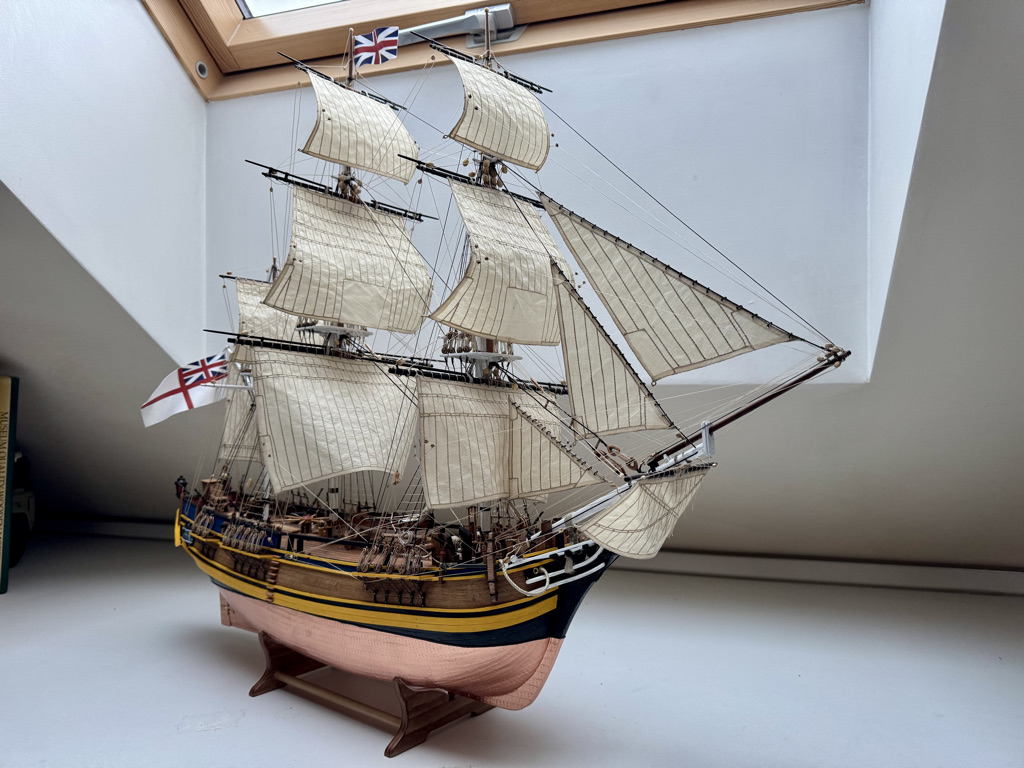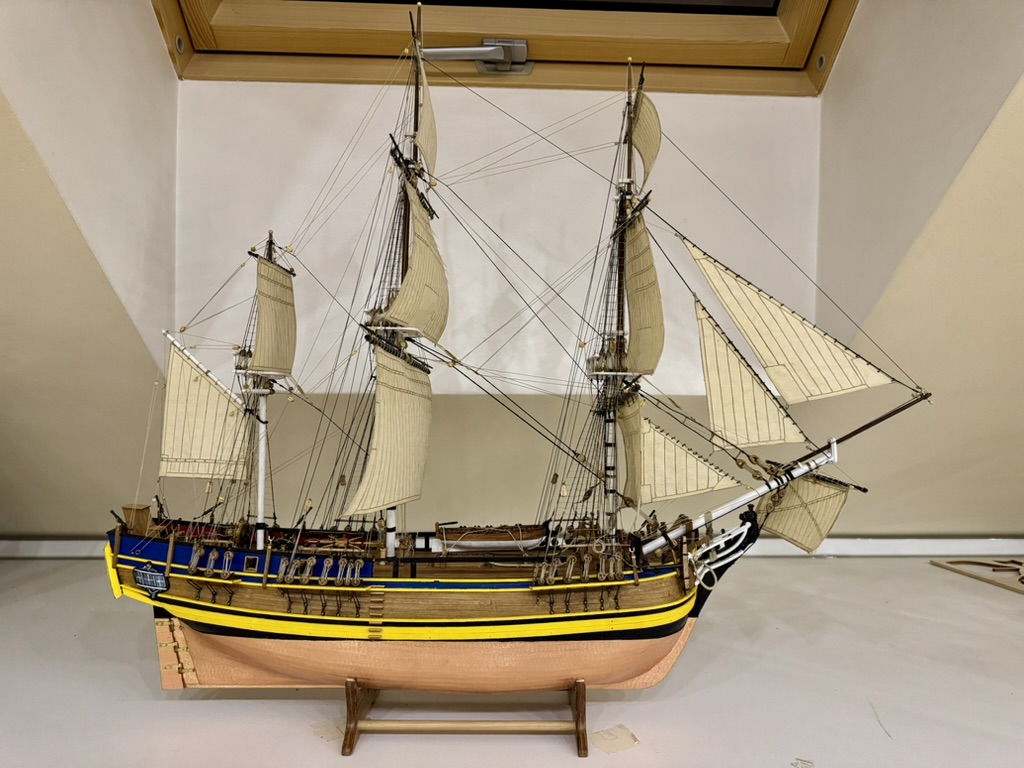
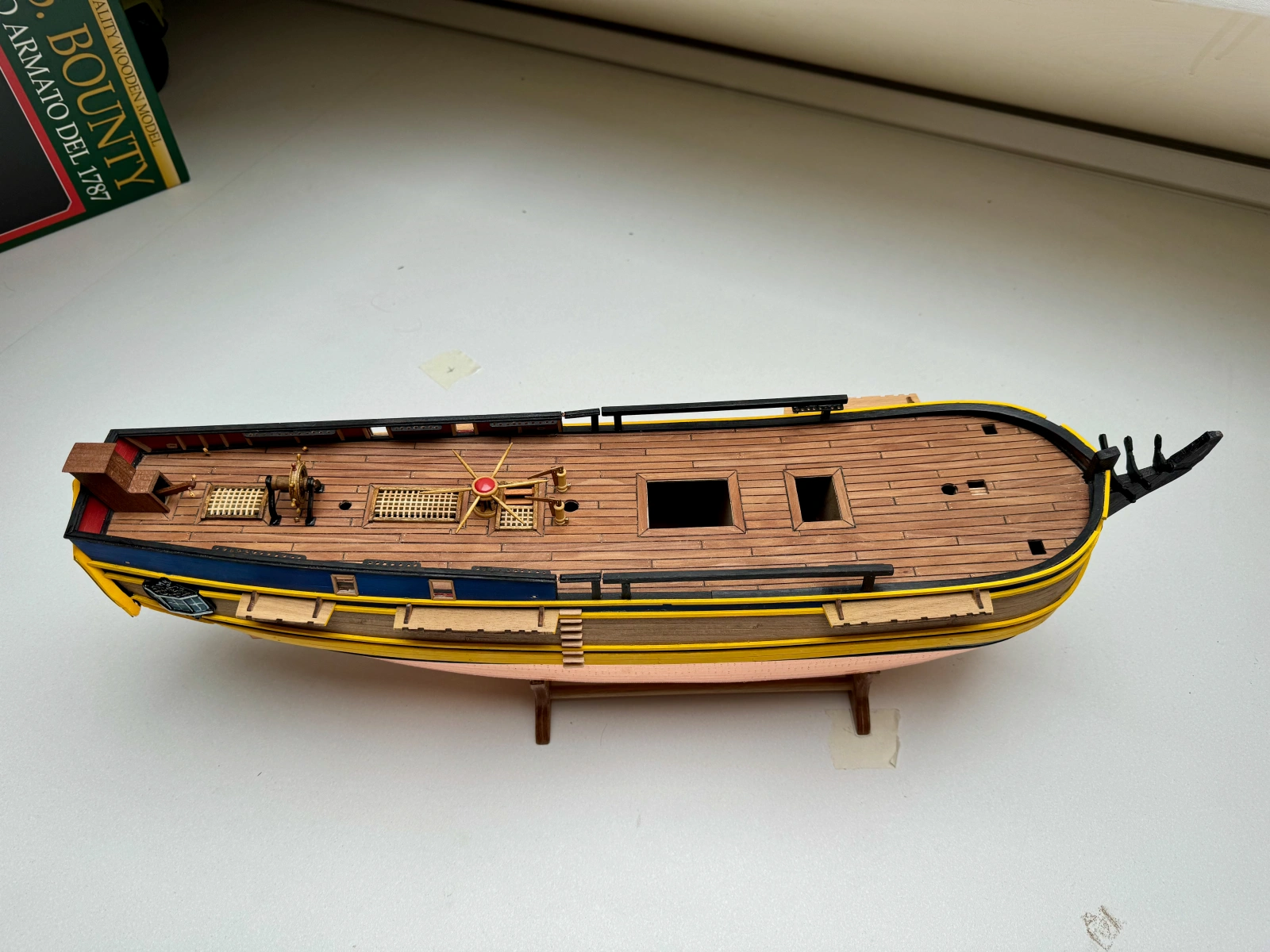
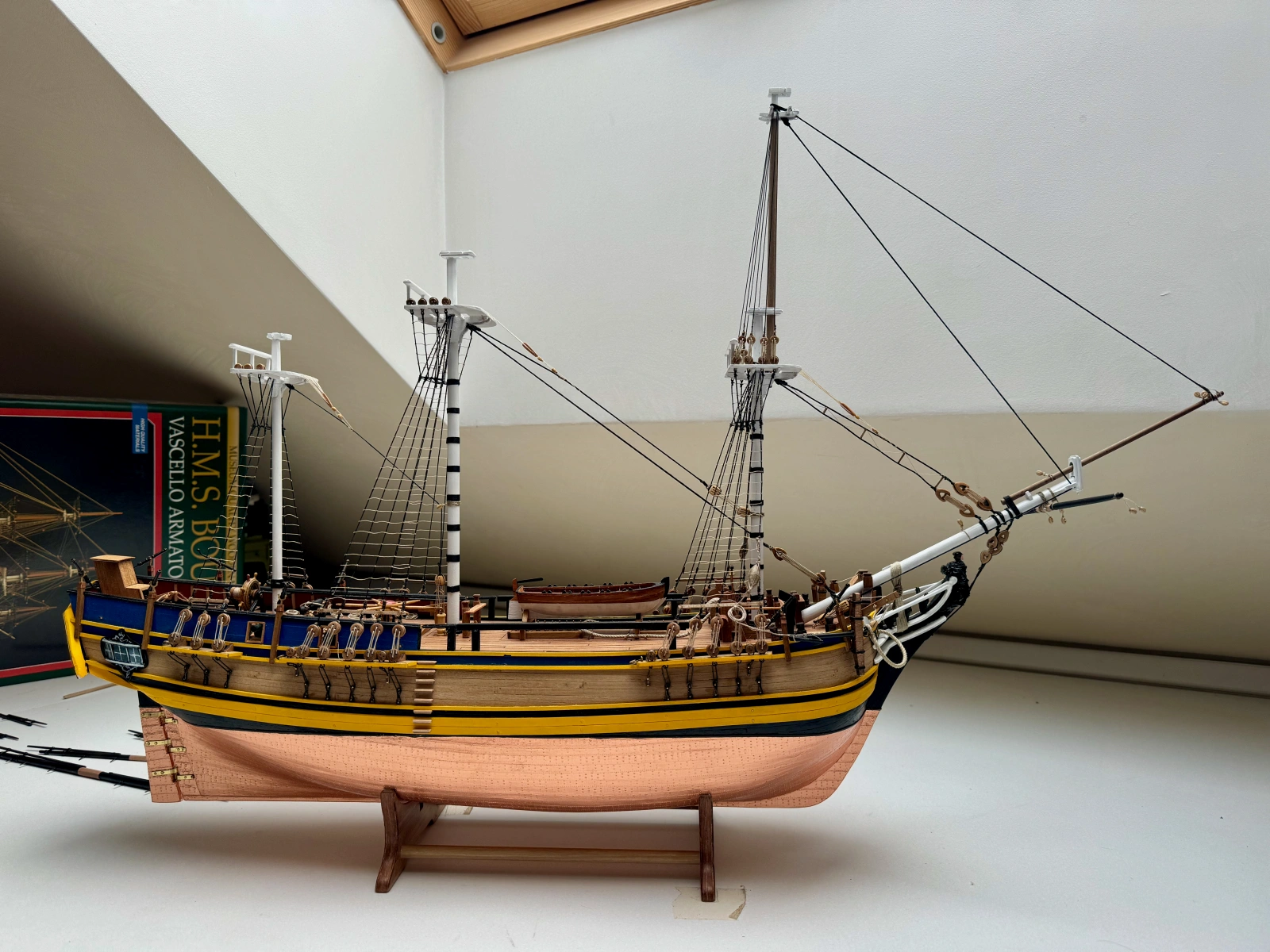
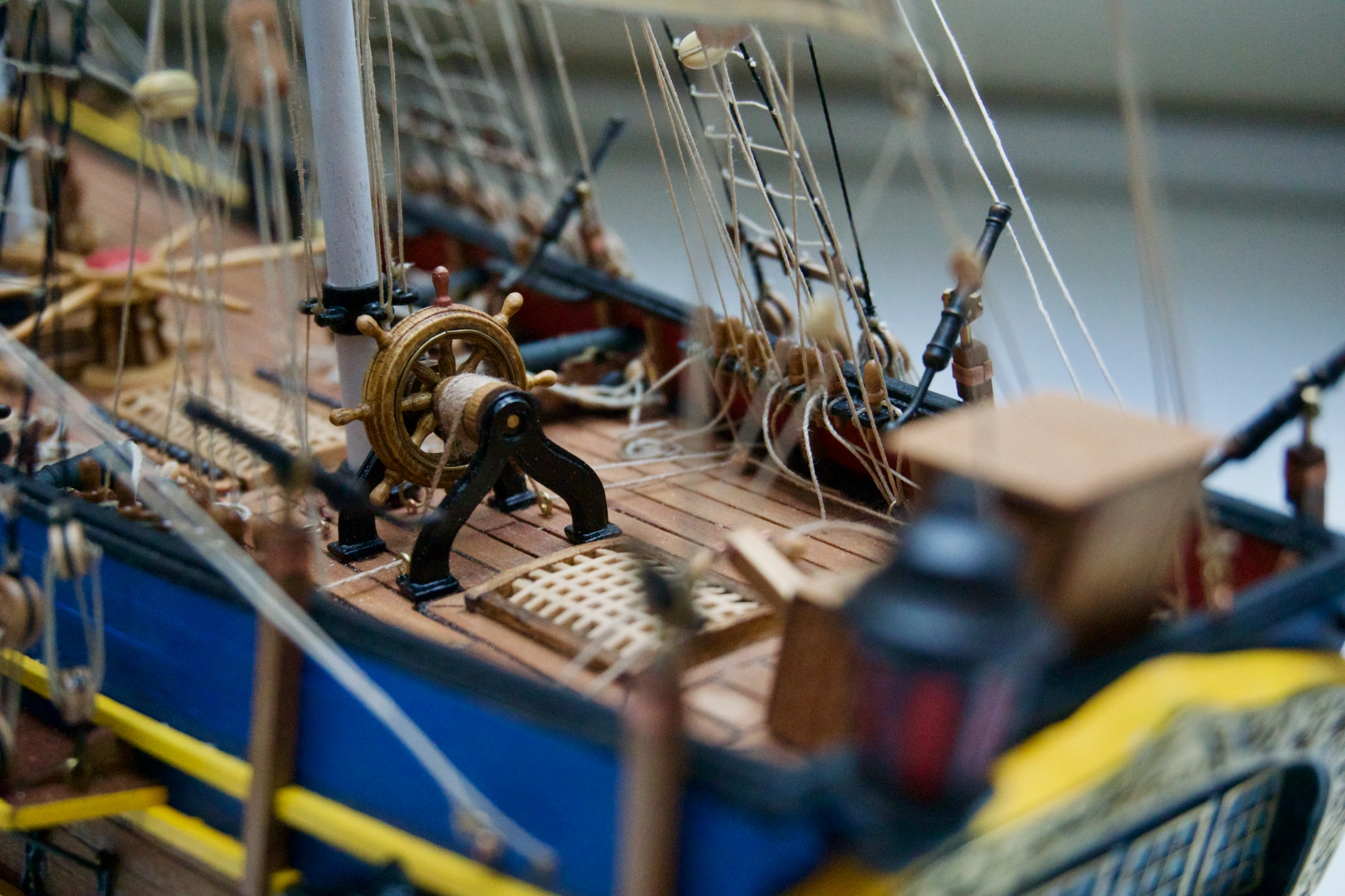
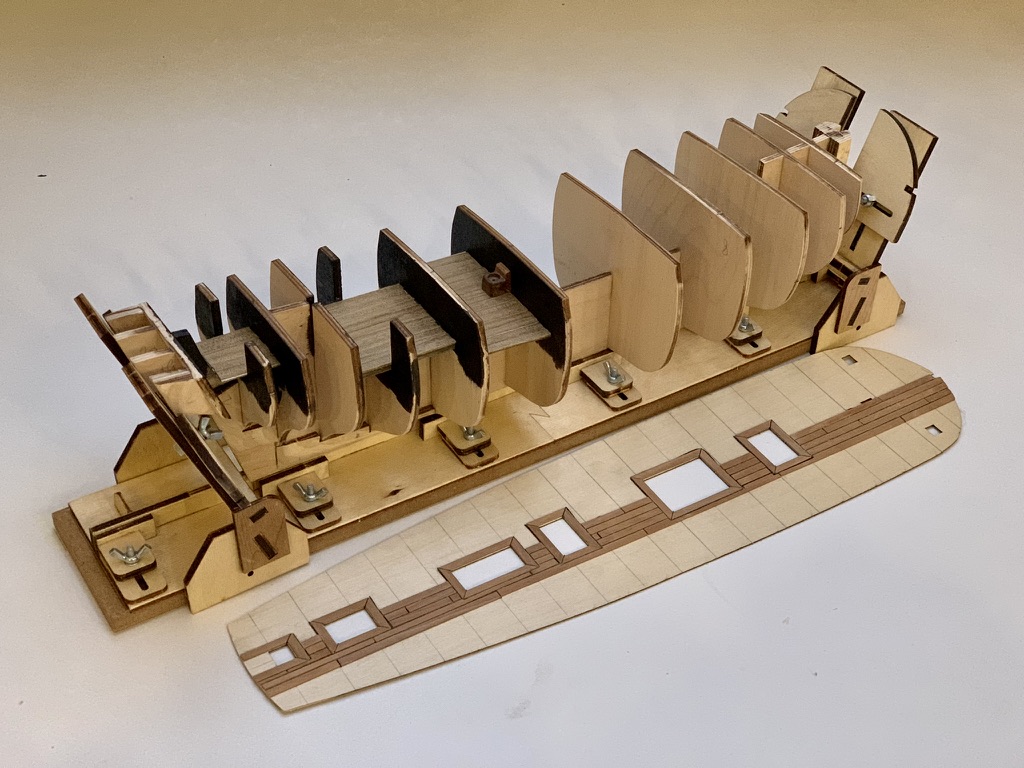
Building the hull of the Bounty model became the first and one of the most important stages of work on this ship. The construction is classic: a plywood keel frame and bulkheads define the shape, while the keel and stem posts are made from solid walnut. The planking is double-layered — first the hull is planked with 1.5 mm limewood strips, followed by an outer layer of 0.5 mm walnut, which gives the model a rich tone and realistic wood texture.
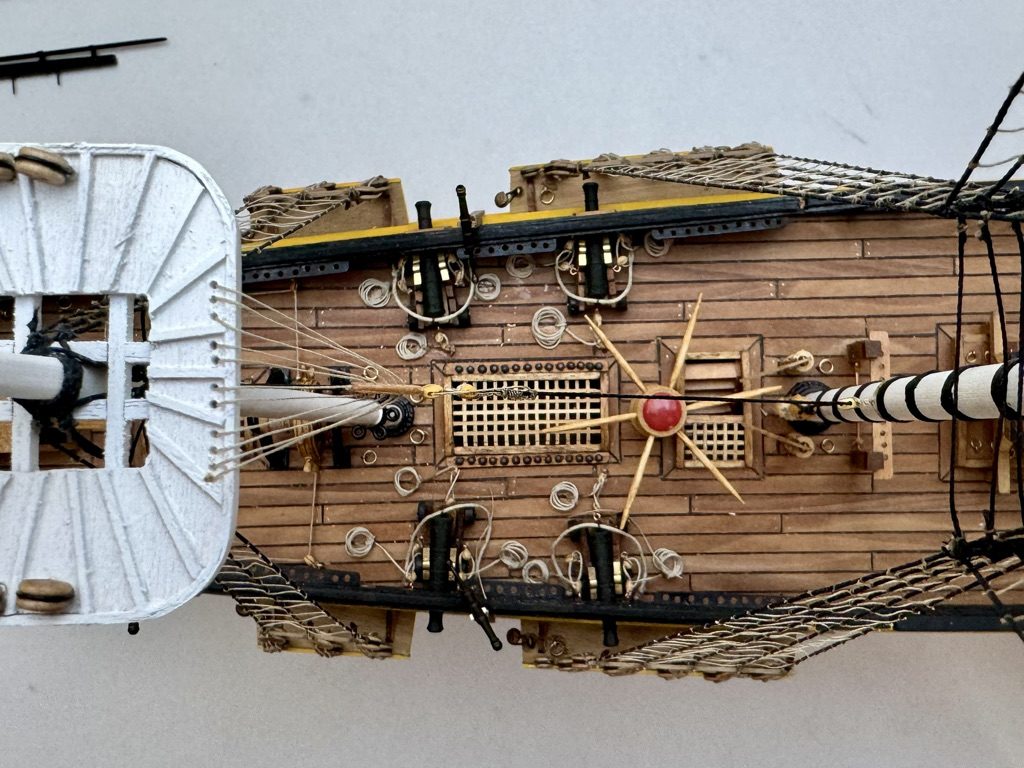
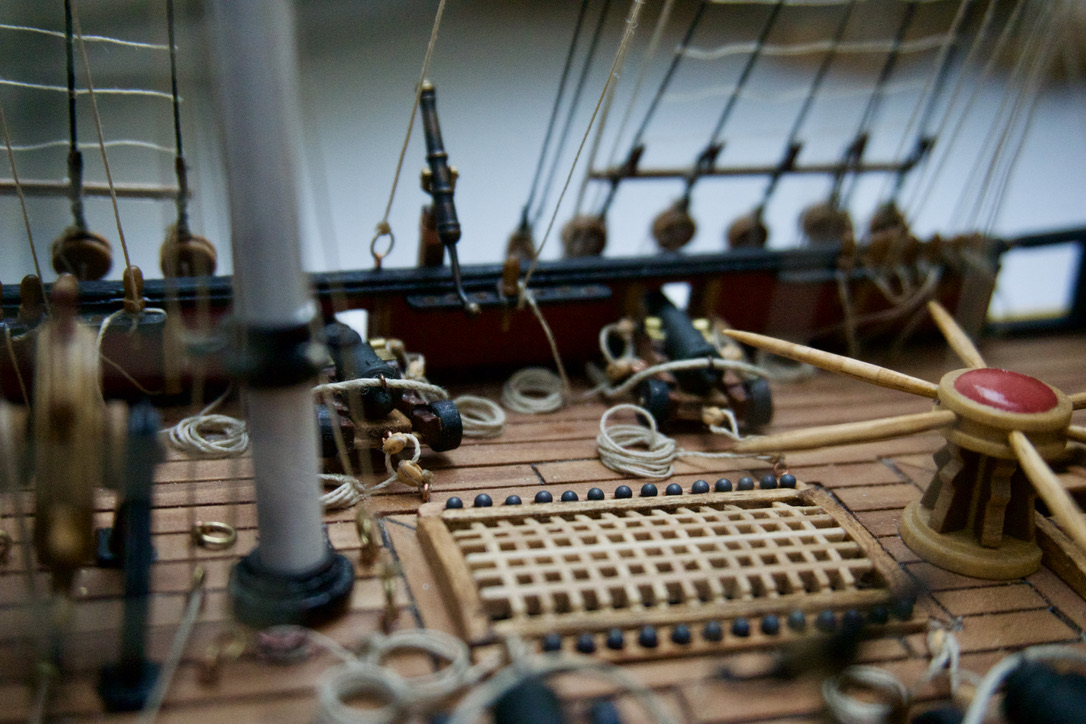
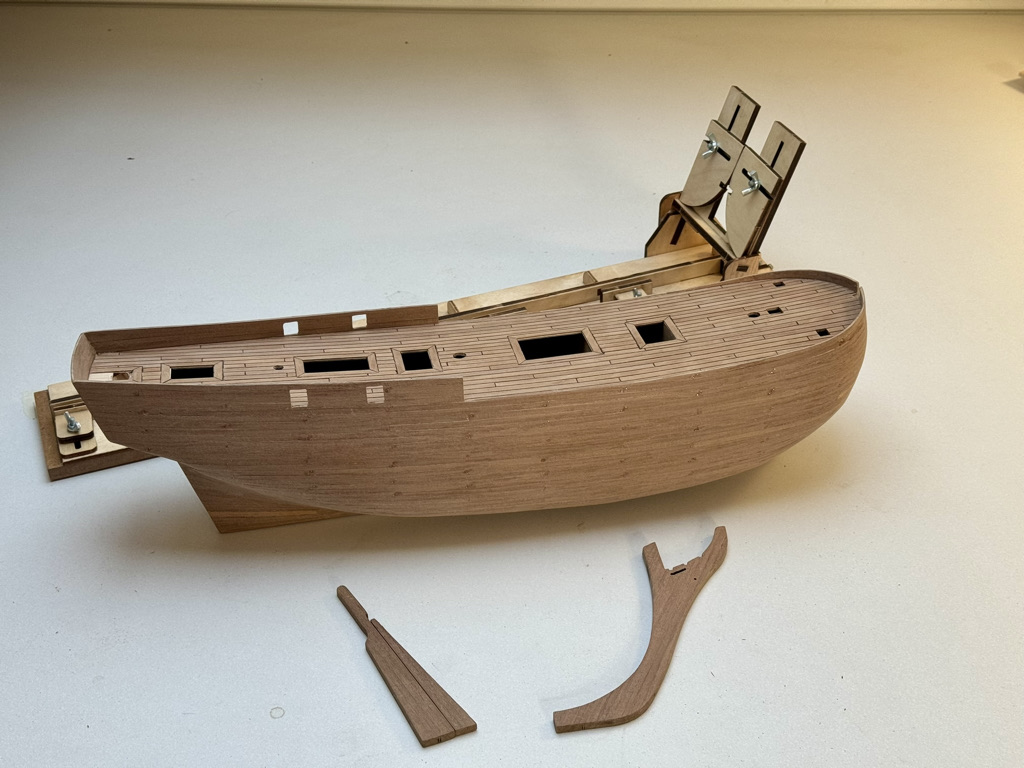
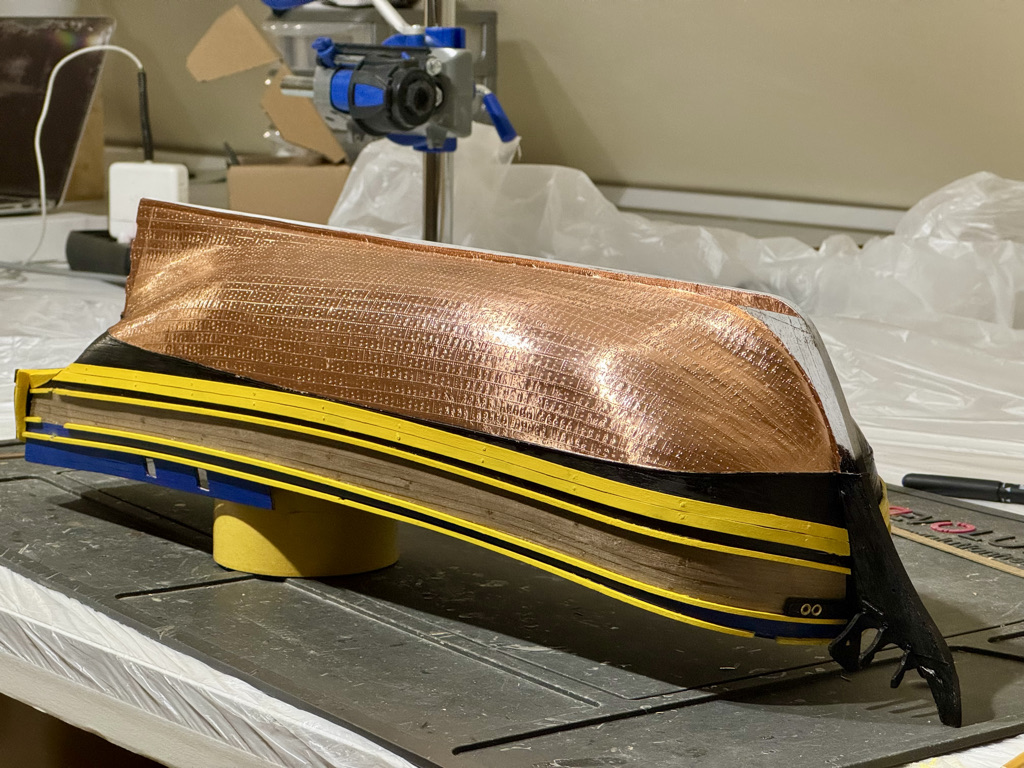
Compared to the original kit, many modifications have been made. Balsa inserts were added to the bow and stern for smoother lines, and additional lower decks were installed beneath the hatches. The main deck is planked with 1 mm pearwood strips, carefully replicating the caulking seams and nail marks — this gives the surface an almost life‑like appearance. The sheer strakes were made according to 18th‑century drawings of the original ship. Above the waterline, nail heads and fastenings are partially imitated, while below the waterline, the hull is sheathed with miniature copper plates, just like on the real Bounty. This not only enhances the look of the model but also adds historical authenticity.
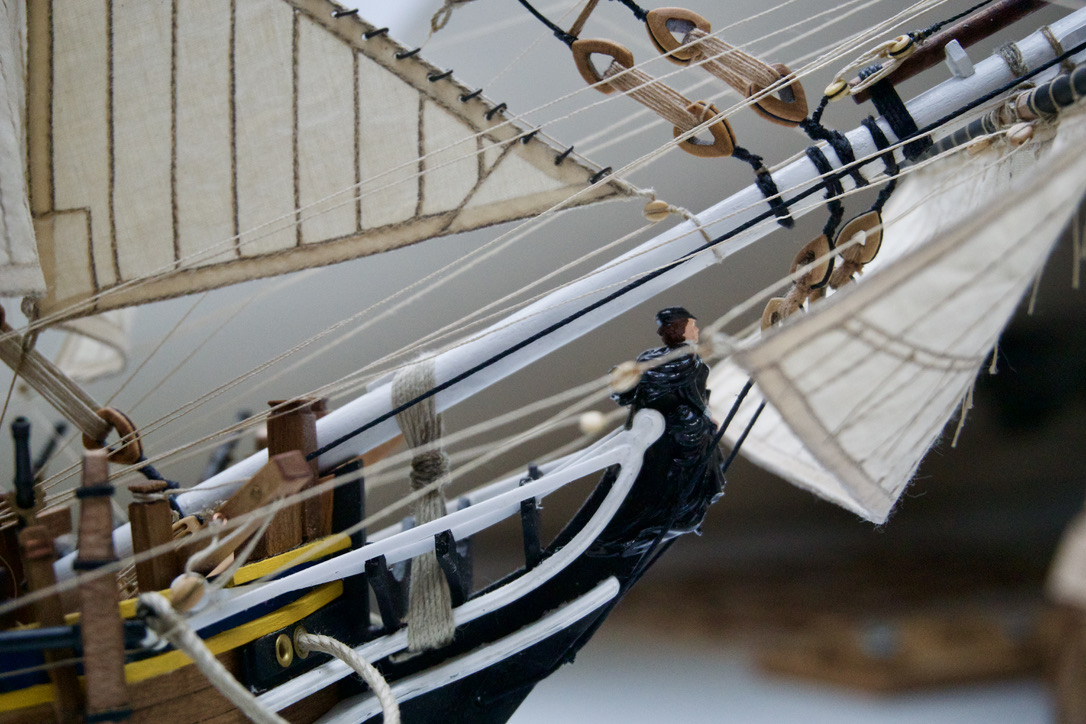
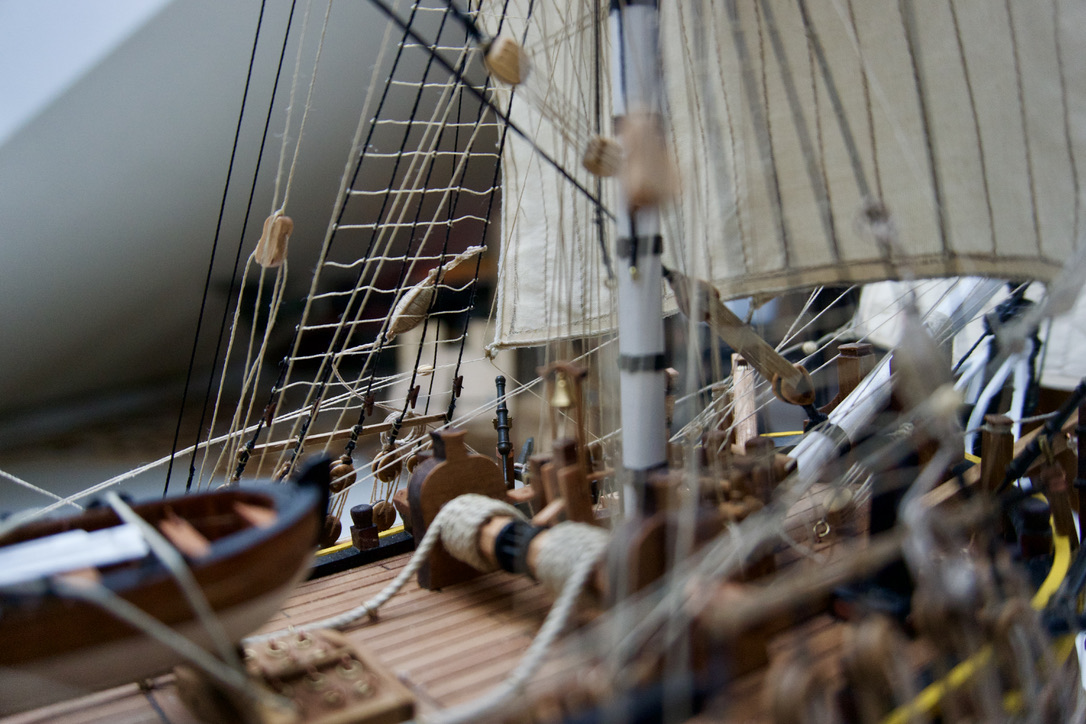
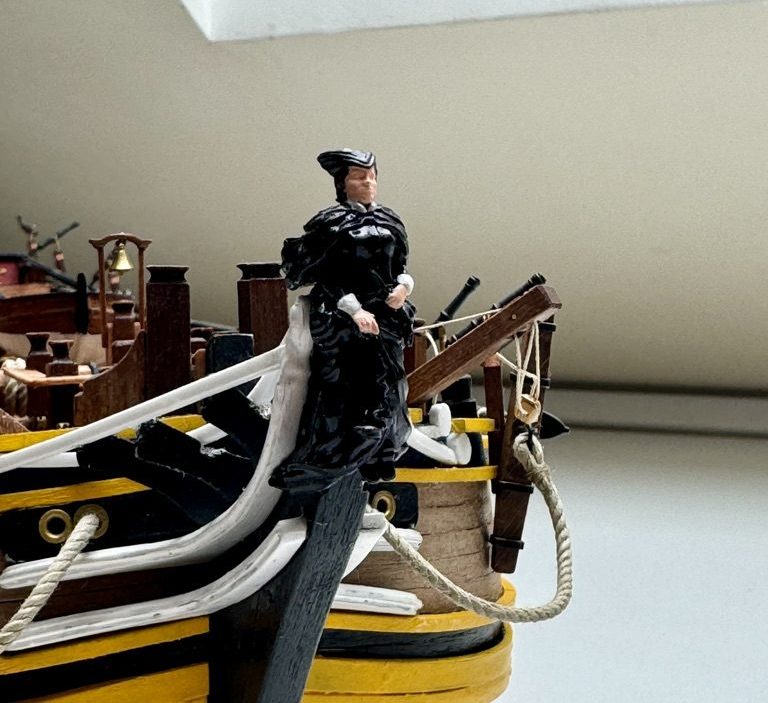
Alongside the hull, several auxiliary elements were extensively reworked. The windlass was completely rebuilt; the cannons were replaced with more historically accurate ones, together with improved gunport framing. The figurehead was also changed to a more faithful replica based on archival references. Special mention goes to the ship’s launch — built entirely from scratch with a framed hull, bent ribs, planking, and deck planks — faithfully reproducing full‑scale shipbuilding methods in miniature.
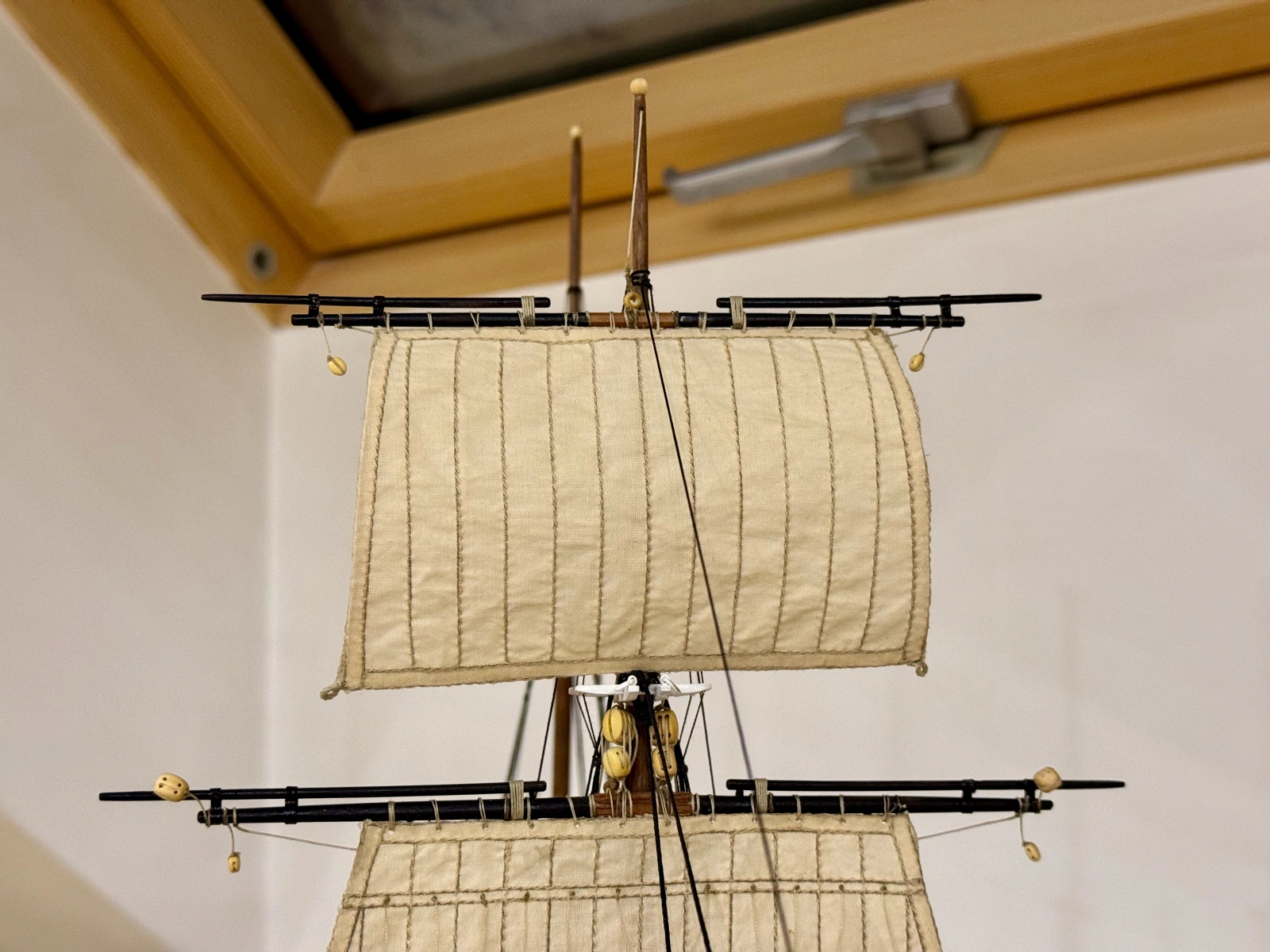
There are many more small refinements and improvements, too numerous to list in detail. Yet it is precisely these subtle details that give the model its sense of life, turning the Bounty from a standard kit into a truly original, handcrafted work with its own character and spirit.