Back to builds

Build Log

Le Requin

completed Scale: 1:48 ZHL Model View gallery →

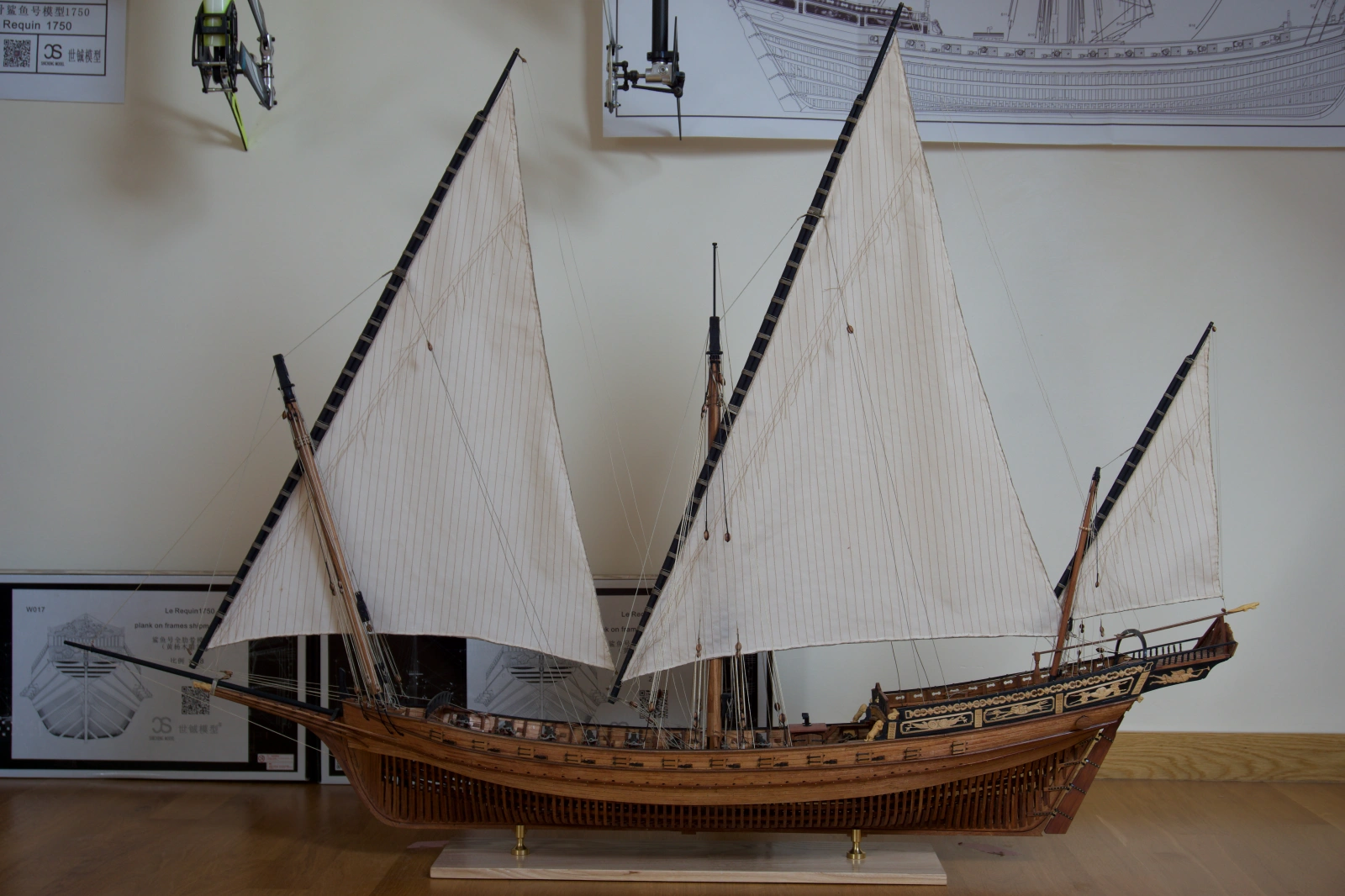
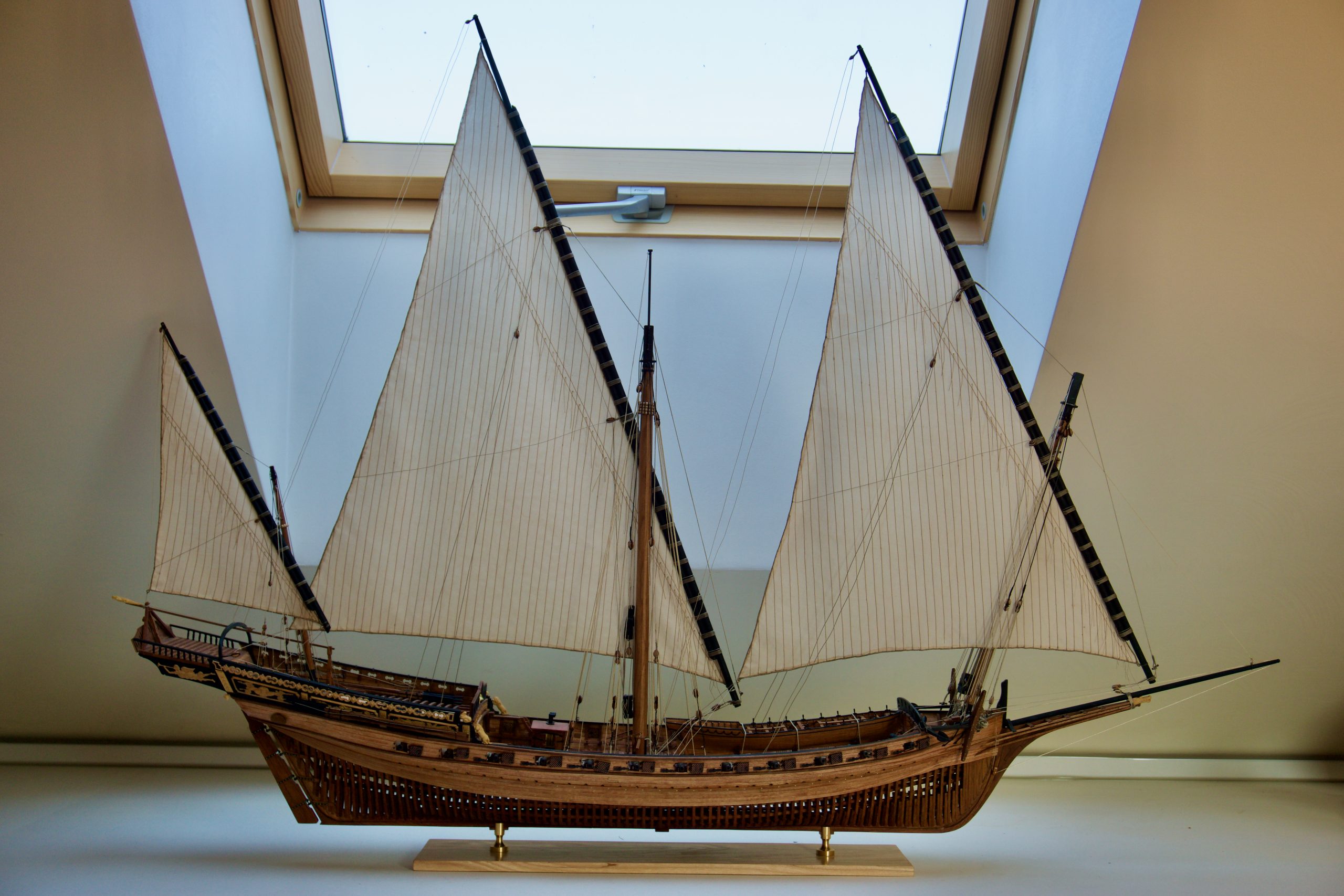
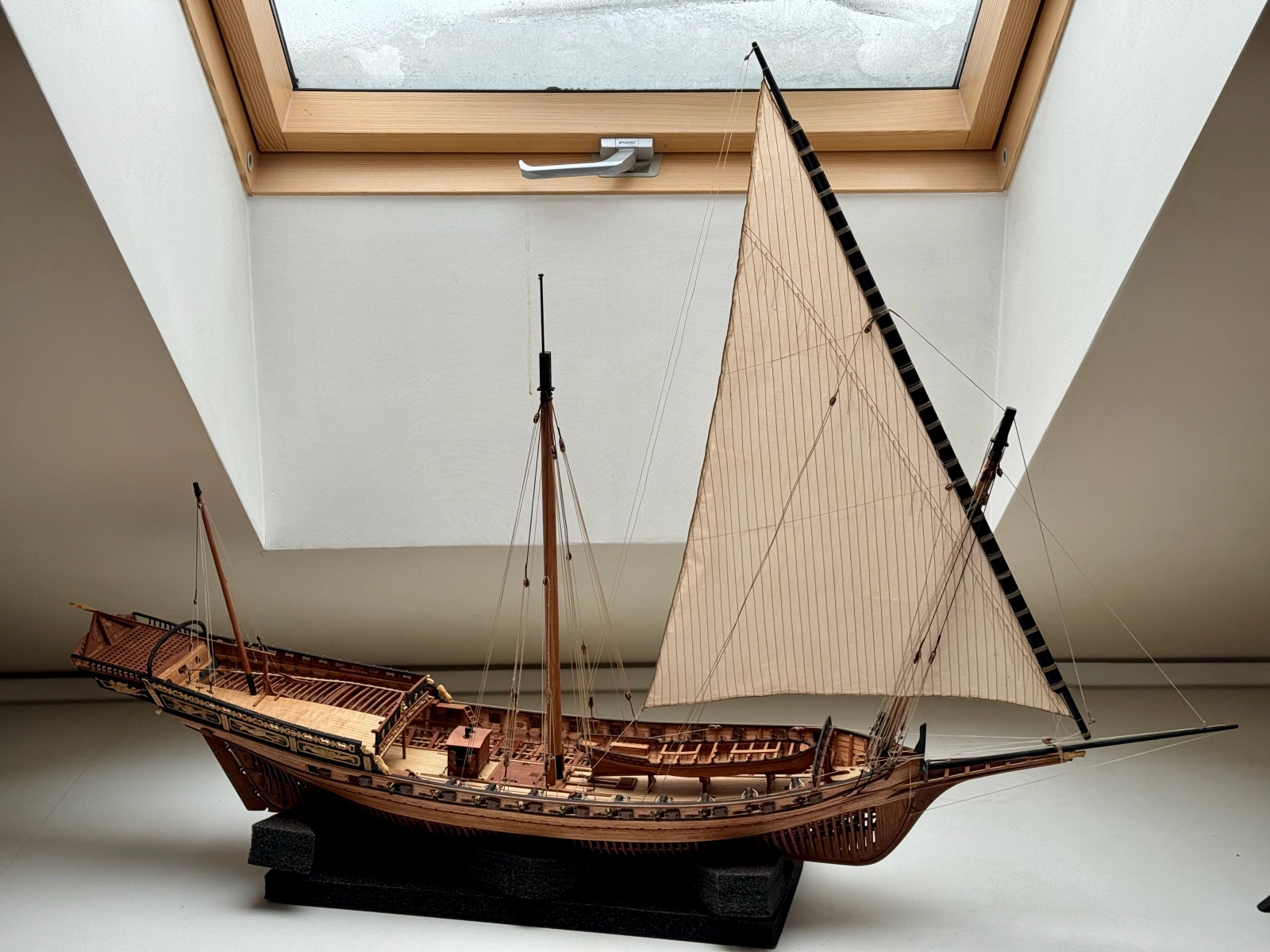
Le Requin is a highly detailed scale model of an 18th‑century French Mediterranean xebec, showcasing the ship’s slender hull, pronounced overhanging bow and stern, and distinctive lateen-rigged masts that emphasize speed and maneuverability.

Le Requin

Historical Background

The original Le Requin (“The Shark”) was built for the French Royal Navy at Toulon around 1750–1751 to operate in the Mediterranean, where her main duties included coastal patrols, escorting convoys, reconnaissance, and combating Barbary corsairs. Designed as a fast, lightly armed warship capable of sailing and rowing, she served for more than a decade before being withdrawn from service in the 1760s, remaining a characteristic example of the evolution of the French light fleet under Louis XV.


Build Log

Part 1

01.02.2025

Slipway

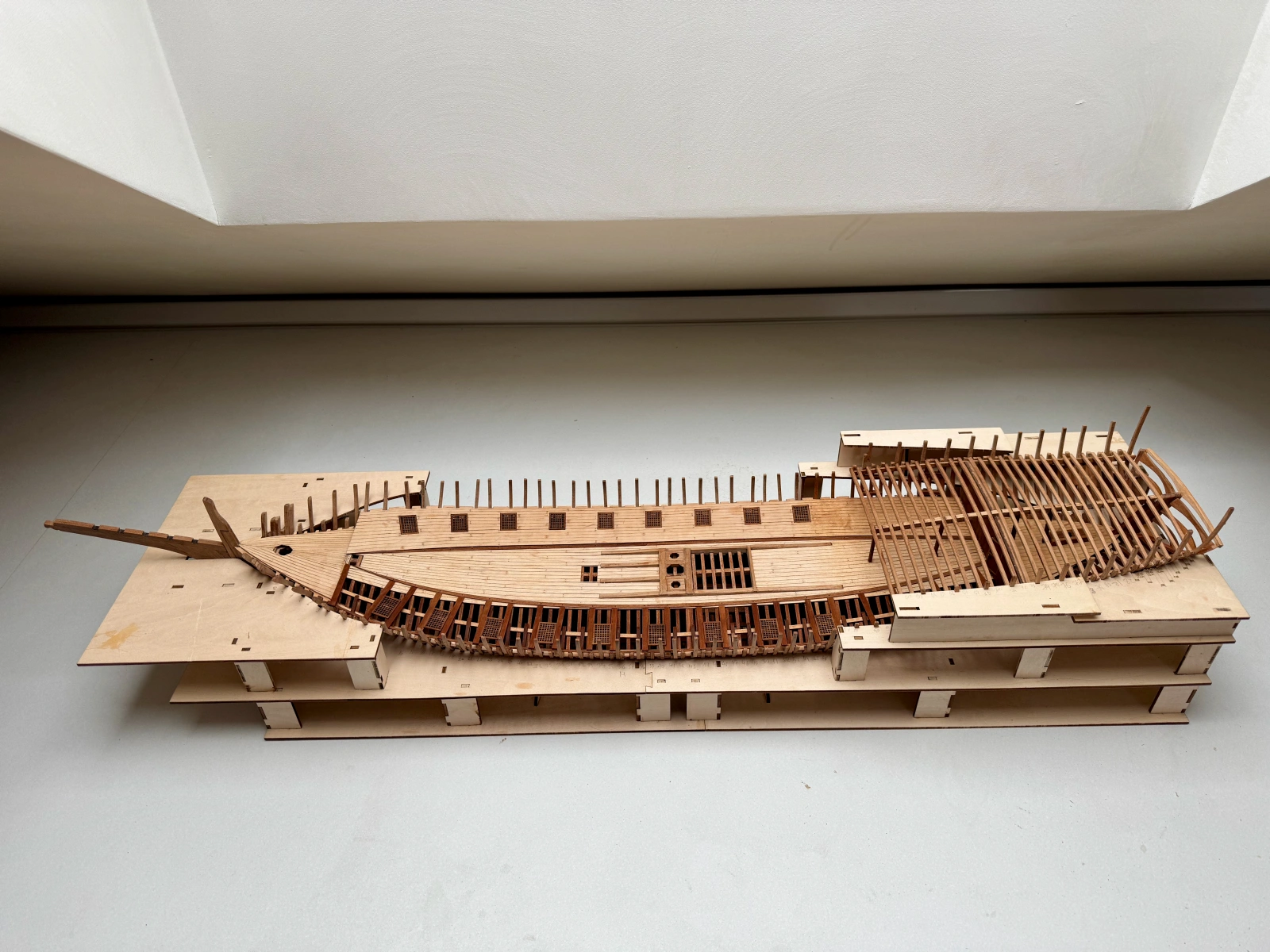
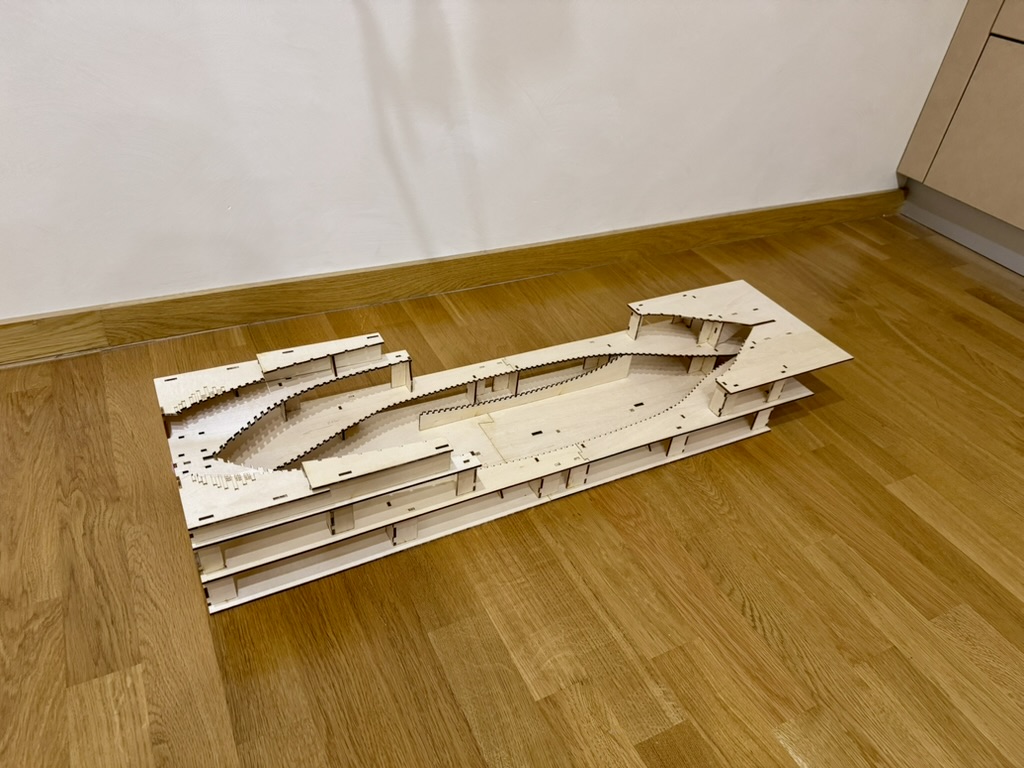
The first step in the build was to craft a custom building slip — the foundation on which the entire model will take shape. This is the only part of the project made from plywood, chosen for its stability and flatness. Although the slip is not an exact replica of the full-size ship’s keel blocks or dock cradle, it performs the same essential function: holding the frames in perfect alignment during the early stages of construction.
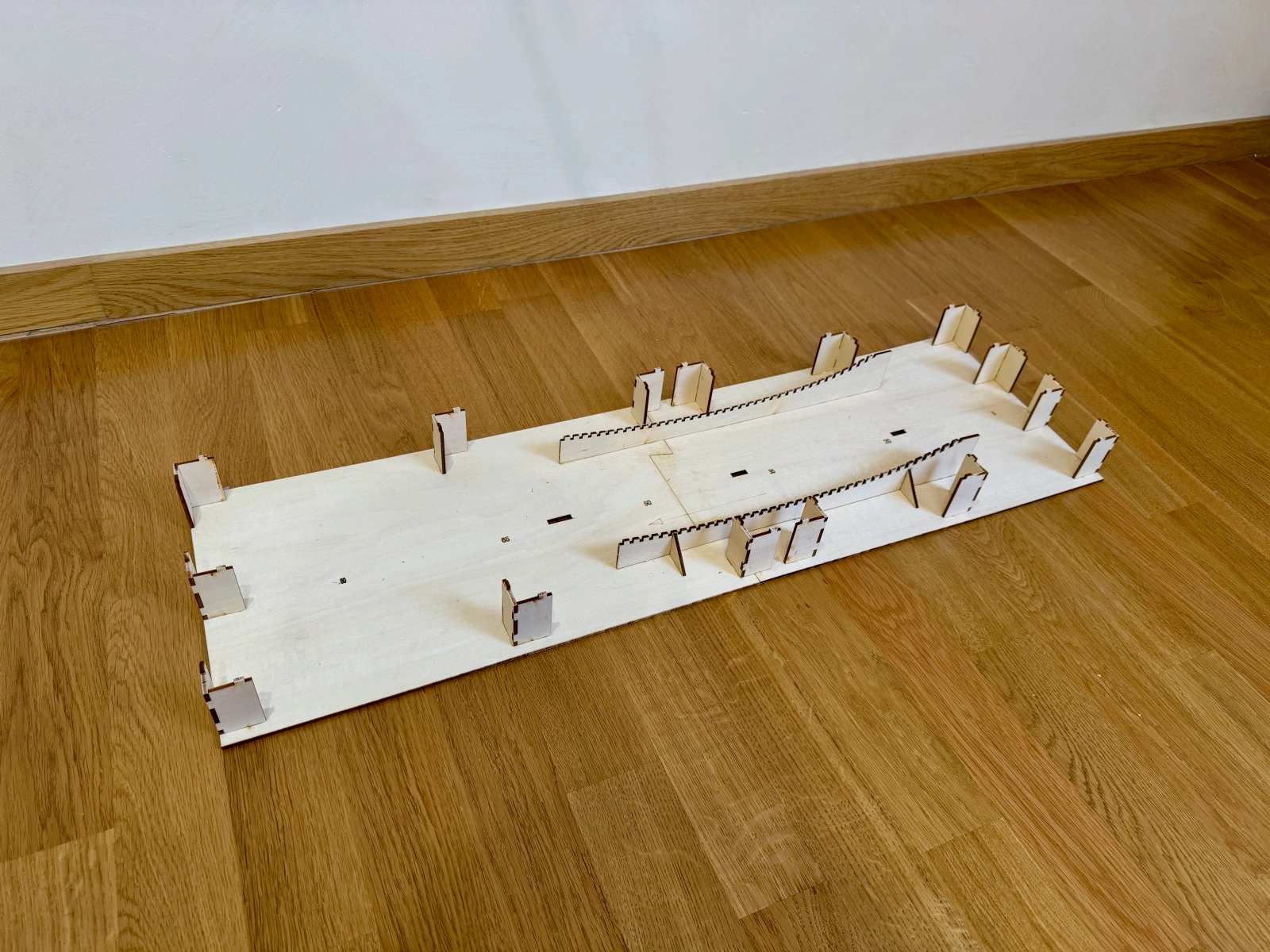
Creating the slip required careful planning. The base had to be absolutely level, with sufficient rigidity to support the weight of the hull as it grows. Small errors at this stage can multiply later, so precision here is vital.
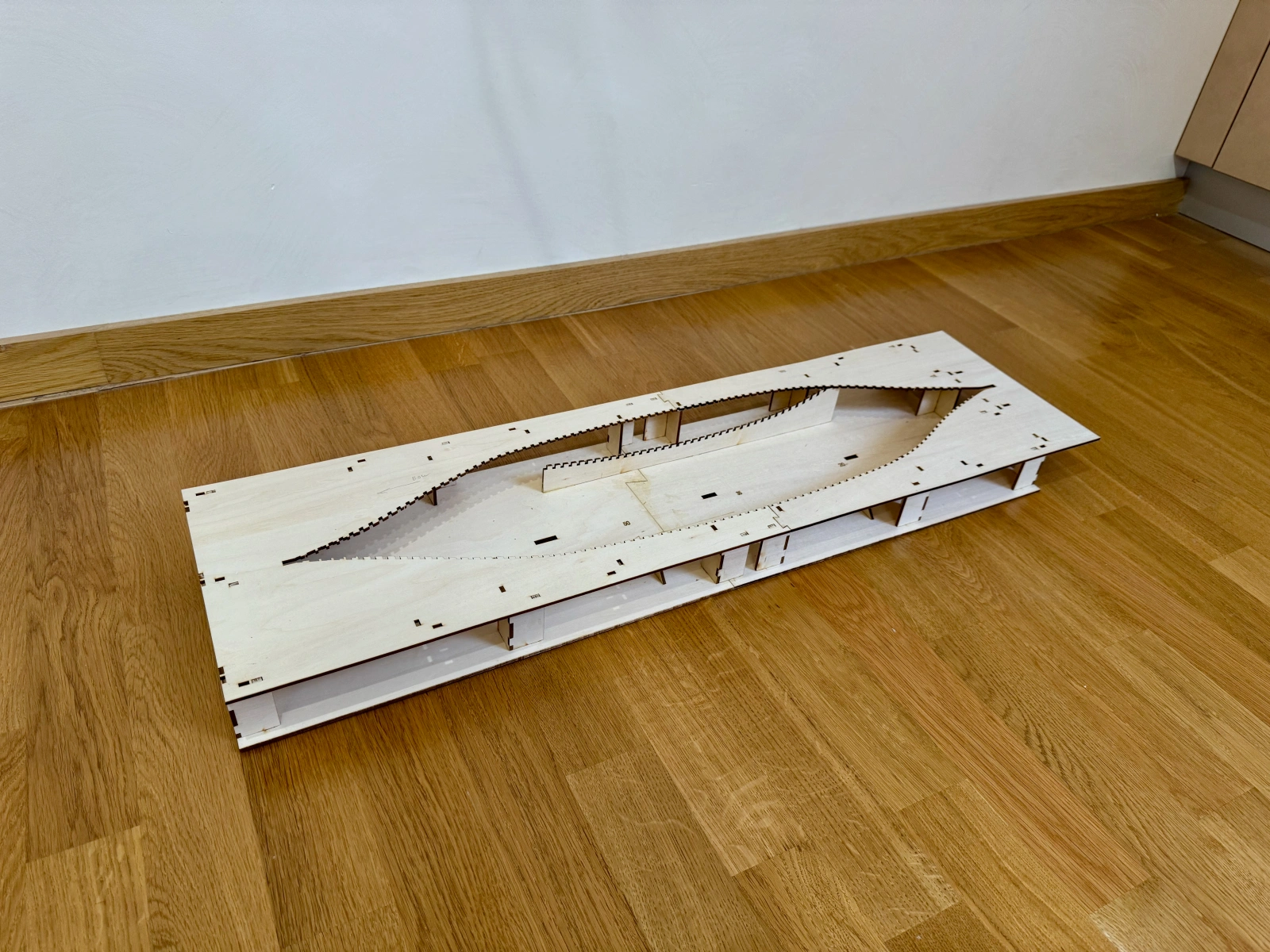
Once completed, the slip transforms the workbench into a miniature shipyard. It provides a stable and convenient working platform where every subsequent step — from installing the keel to setting the bulkheads — can be performed with confidence. In many ways, this simple plywood jig is the unseen backbone of the model, quietly ensuring that everything above it comes together as intended.
↑ Back to all parts

Part 2

19.10.2025

The hull

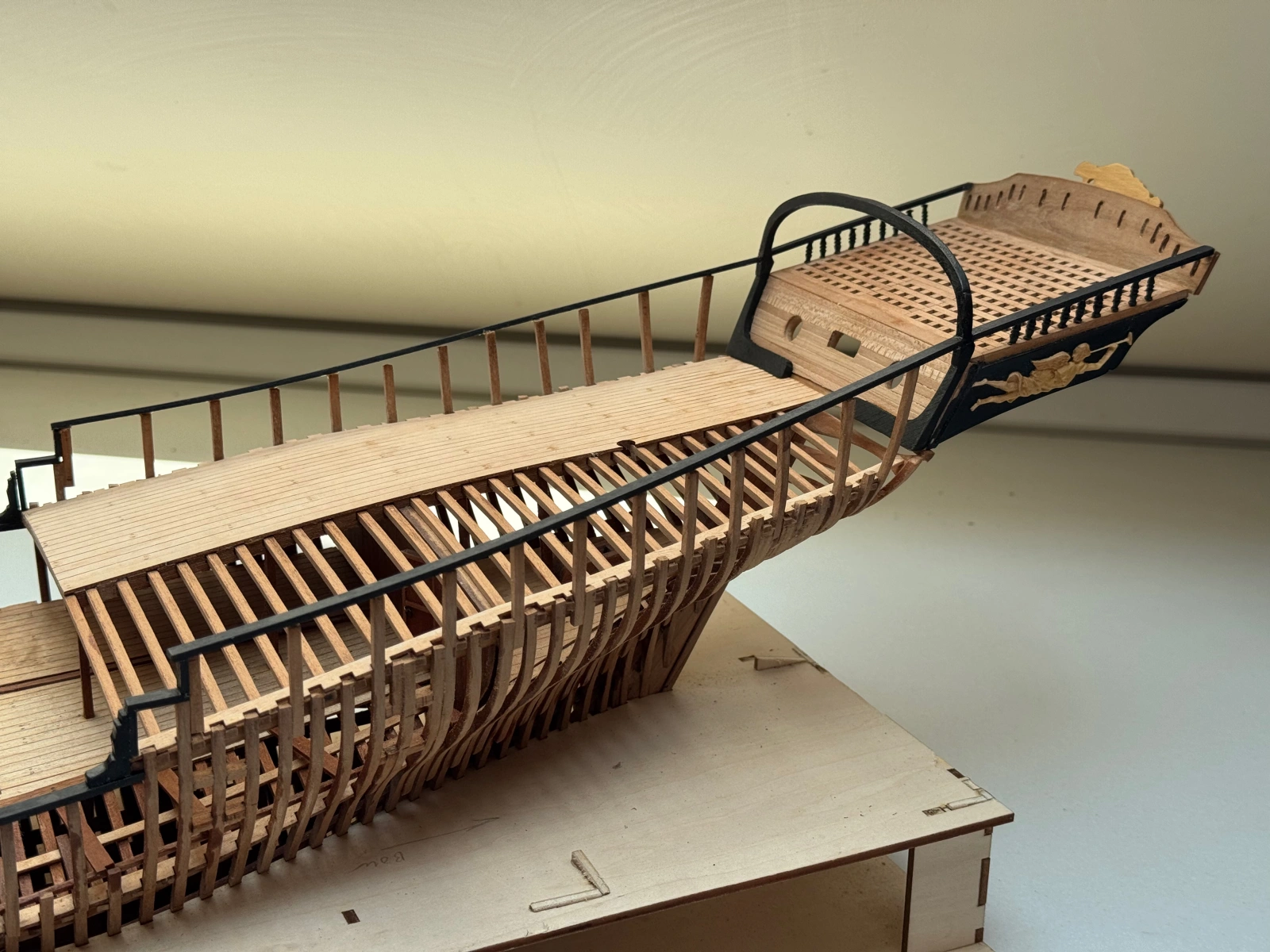
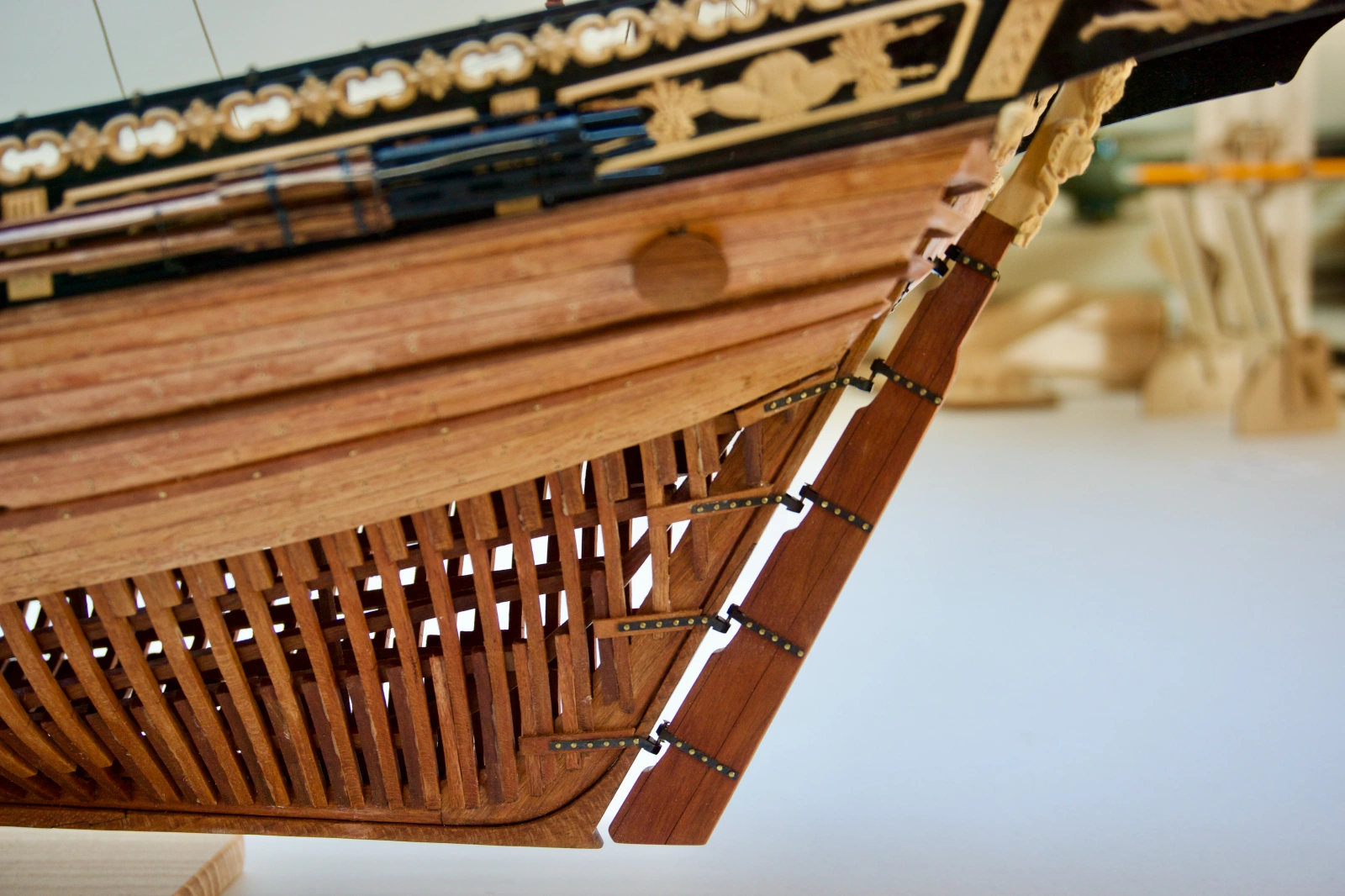
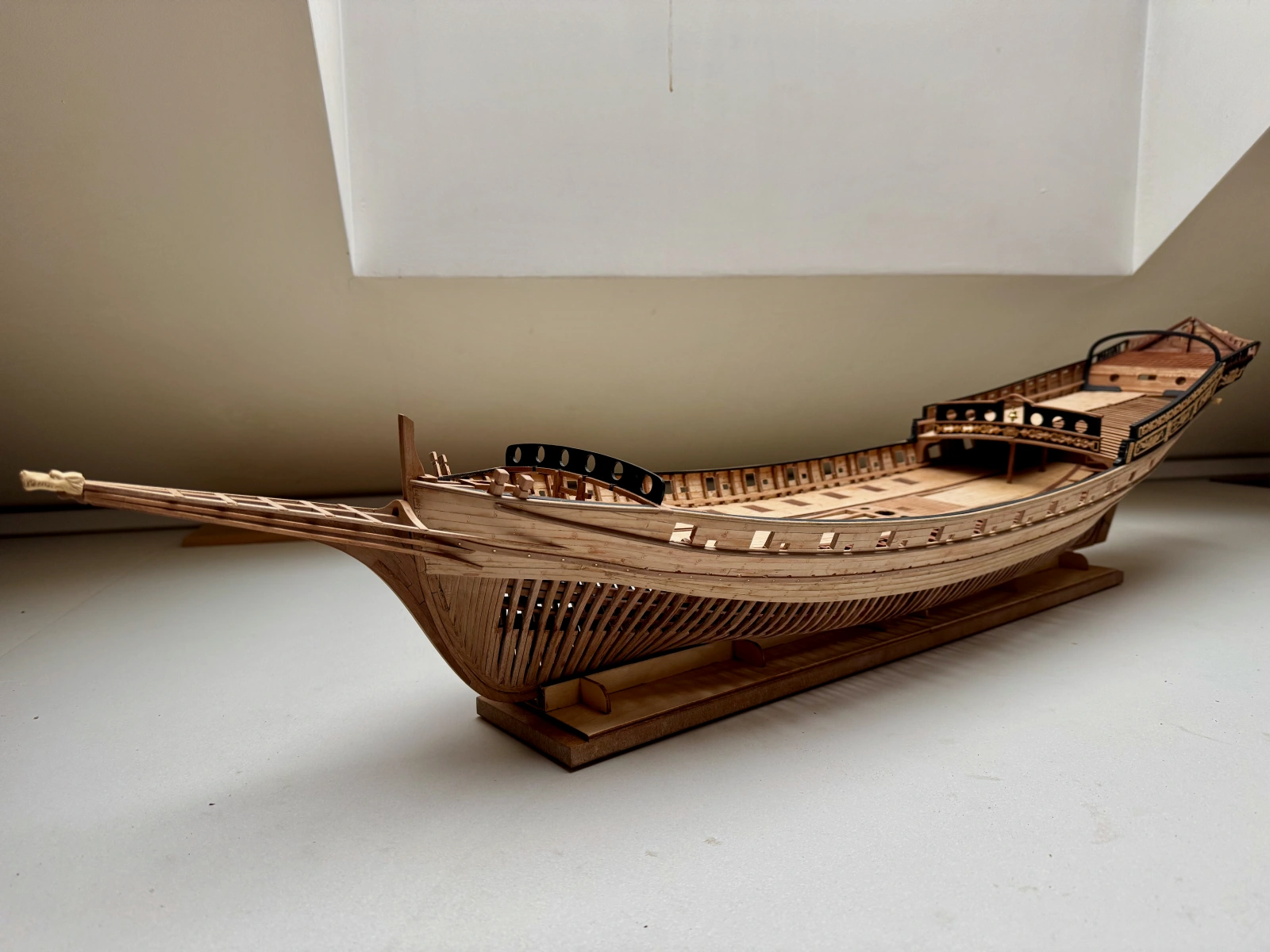
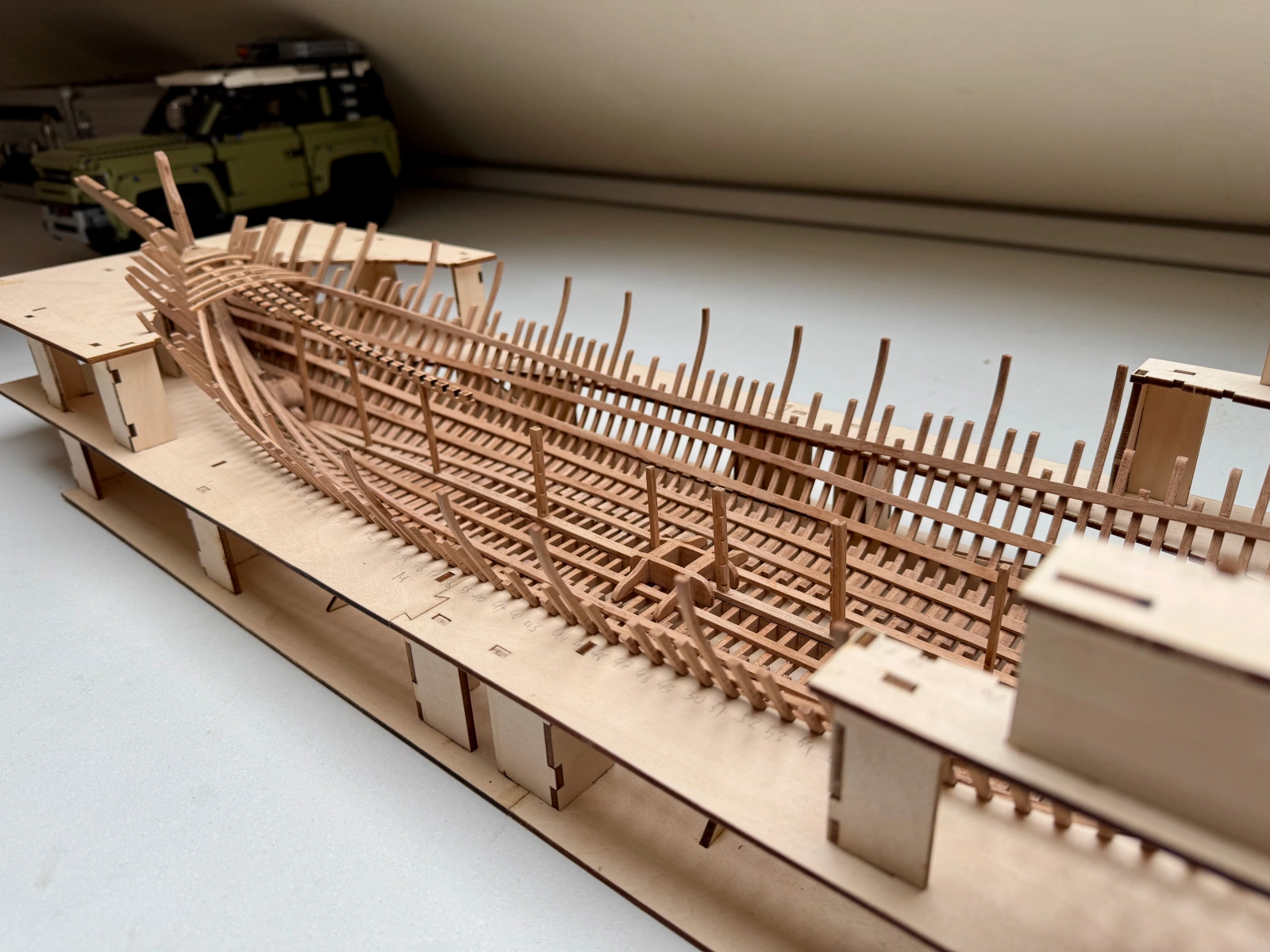
Assembling the hull framework is one of the most exciting stages of the project. We began with the keel, the frame set, and the stem and stern posts – the very elements that form the “skeleton” of the ship. Just like on a real vessel, the structure is composite: the stem is made up of eleven carefully fitted parts, the stern post is assembled from eight parts, and the keel consists of three.

Next came the frames. Each of the more than eighty frames is built from several components — floor timbers, futtocks, and top timbers. Gradually, an intricate wooden skeleton rises on the slipway, where every detail demands precise alignment and the builder’s patience. Once all the frames are in place, additional reinforcements – the keelson and stringers – are added, giving the entire structure rigidity and correct geometry.

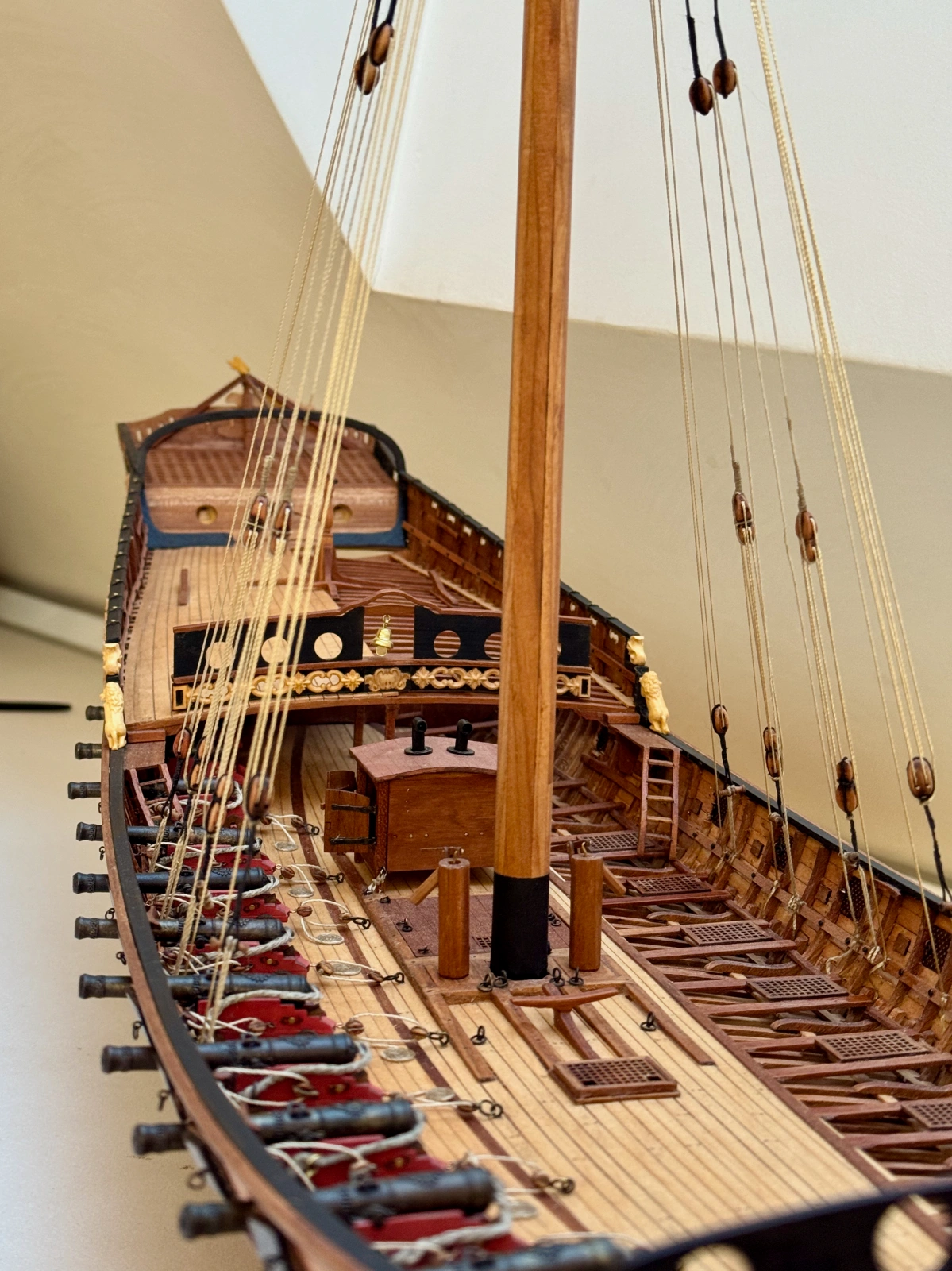
Then it was time for the decks. The main deck was fully installed, but on the port side, in the Admiralty style, the deck beams were left exposed to show the inner structure. On the starboard side, the upper deck was added, creating a striking contrast and allowing a clear view of the internal framework. The quarterdeck was treated in a similar way, revealing how the hull gradually takes on its complete shape.

Finally, the model was lifted off the slipway – always a symbolic and emotional moment in any build. The ship’s skeleton is complete, the hull aligned and reinforced, and for the first time, the future vessel’s graceful lines can be seen in full. This stage always brings a special feeling — when a collection of parts transforms into a tangible form, capturing the true spirit of the sea in miniature.

↑ Back to all parts

Part 3

22.11.2025

Deck and cannons

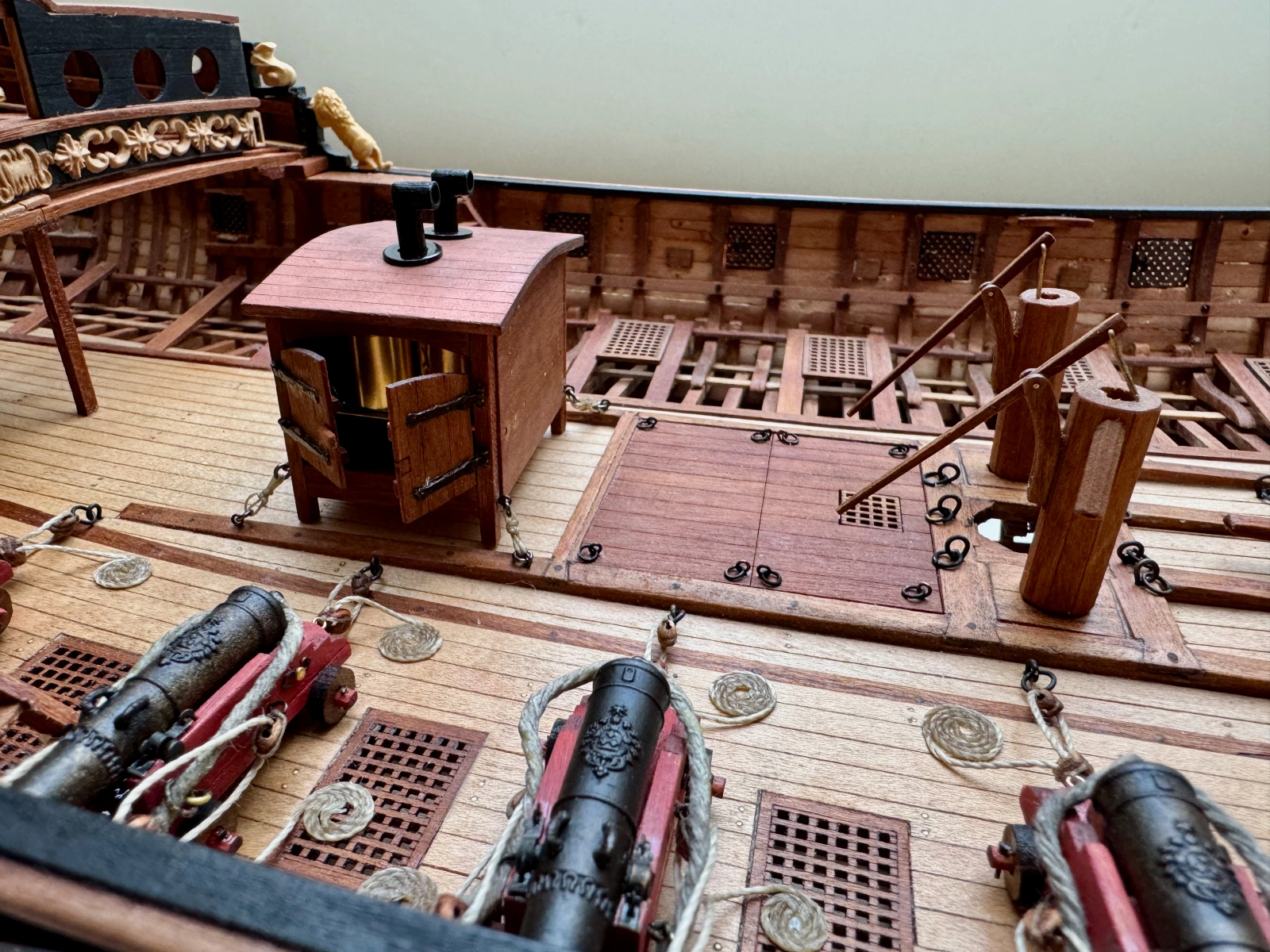
After completing the assembly of the hull’s structural framework, work moves on to deck planking. The main deck is laid first: the central section is reinforced with additional beams in the area of the future mainmast and the coaming of the cargo hatch. The upper deck along the starboard side follows, where the planking is laid in full, complete with gratings and supporting deck beams. To port, by contrast, the beams are left exposed in Admiralty style, revealing the vessel’s internal structure and giving the model a particularly expressive, asymmetric look.

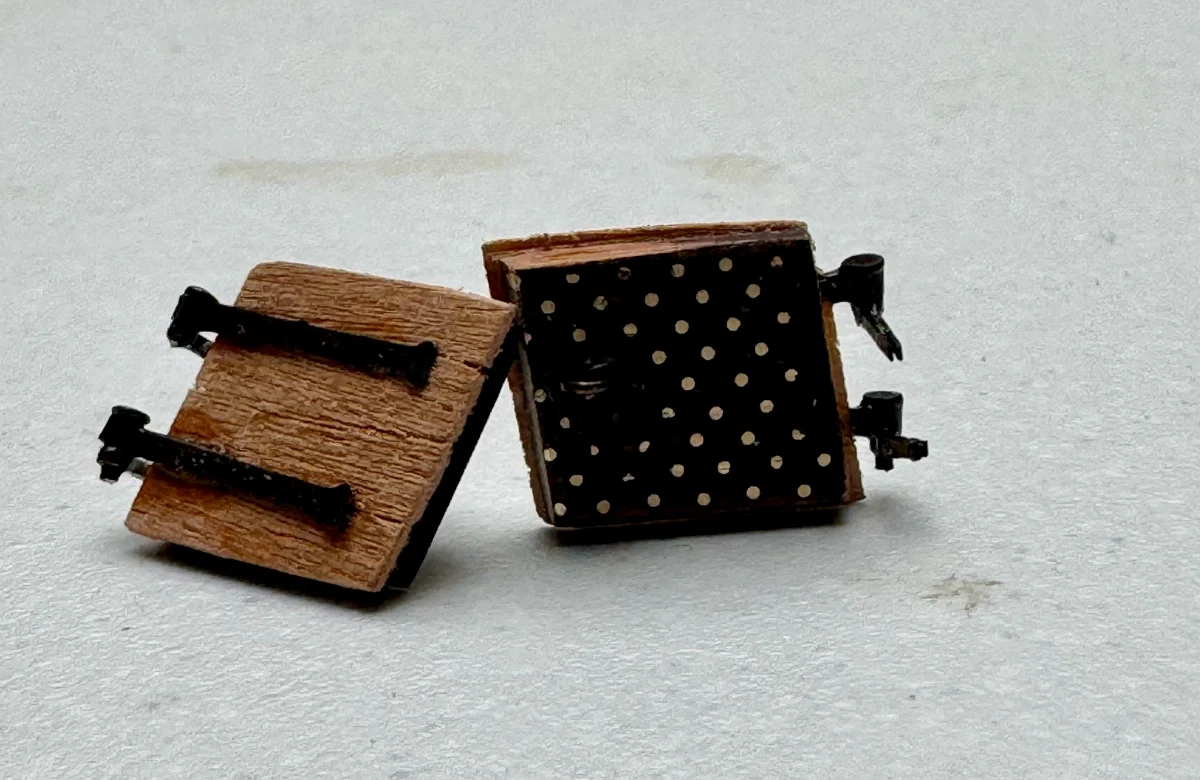
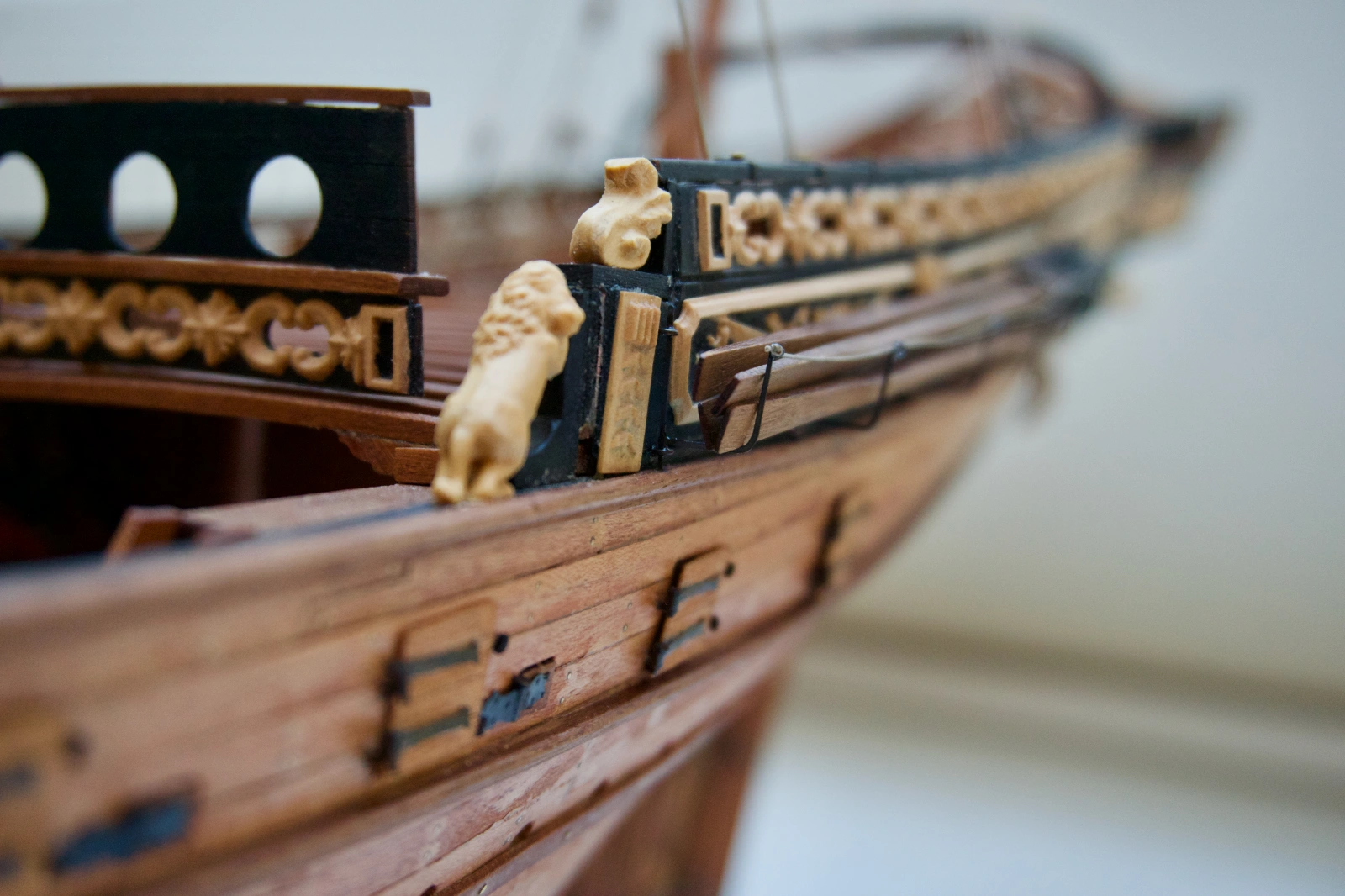
The next stage focuses on the gunport lids and scuppers. Each lid is fitted to its own opening, which is cut individually and adjusted precisely in place. The work naturally breaks into short, repetitive cycles: assemble a lid, cut the matching opening, number the finished piece, and set it aside. By the end of this phase, twelve pairs of gunport lids and ten pairs of scupper lids are completed, adding a dense layer of fine detail to the hull.

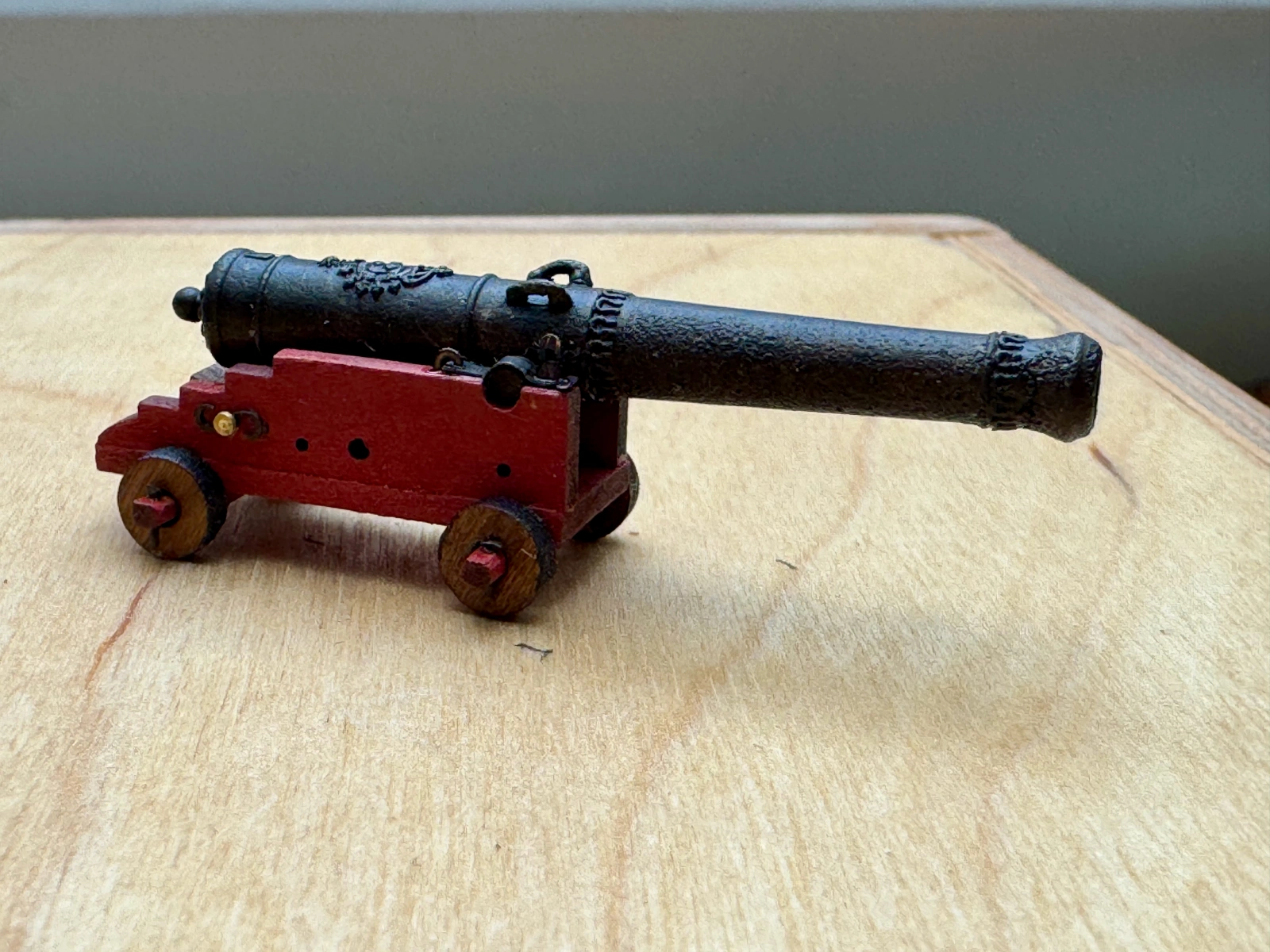
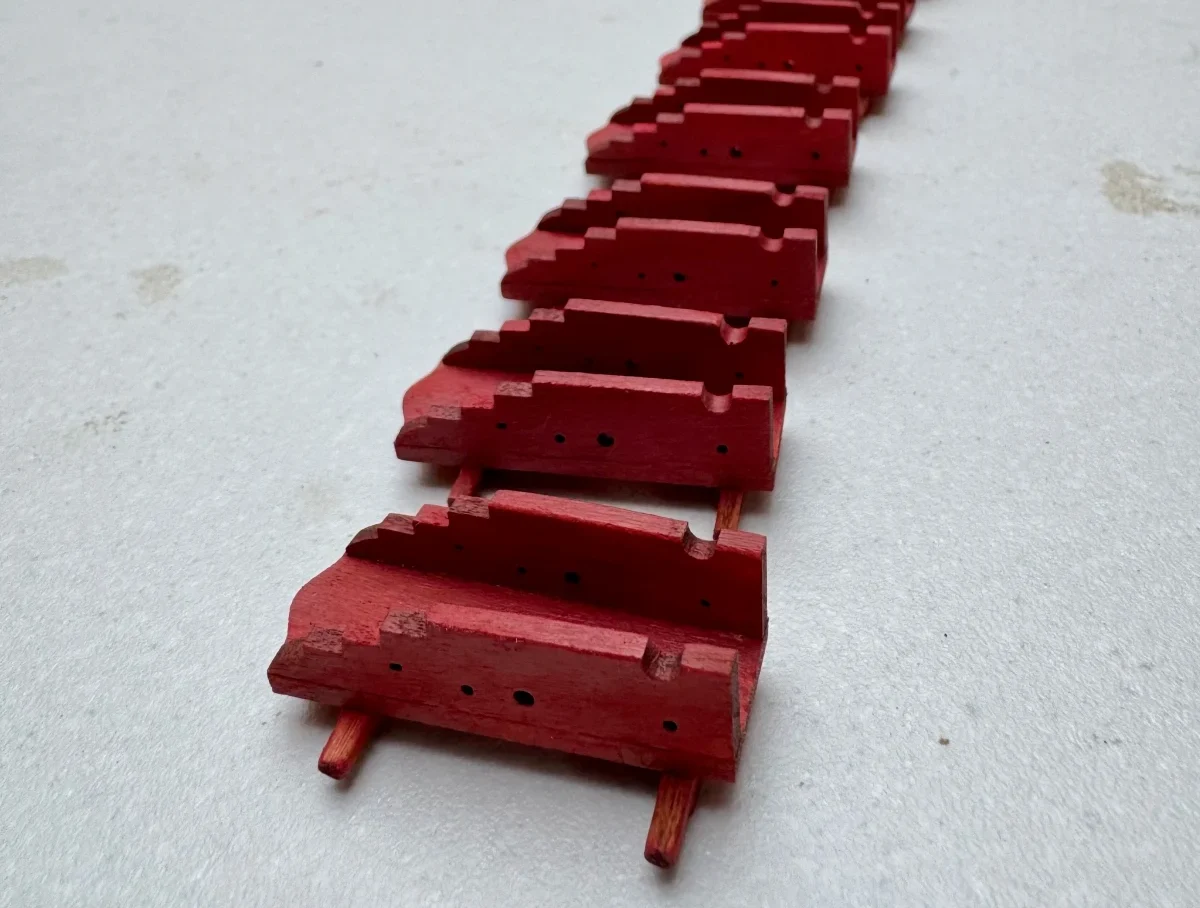
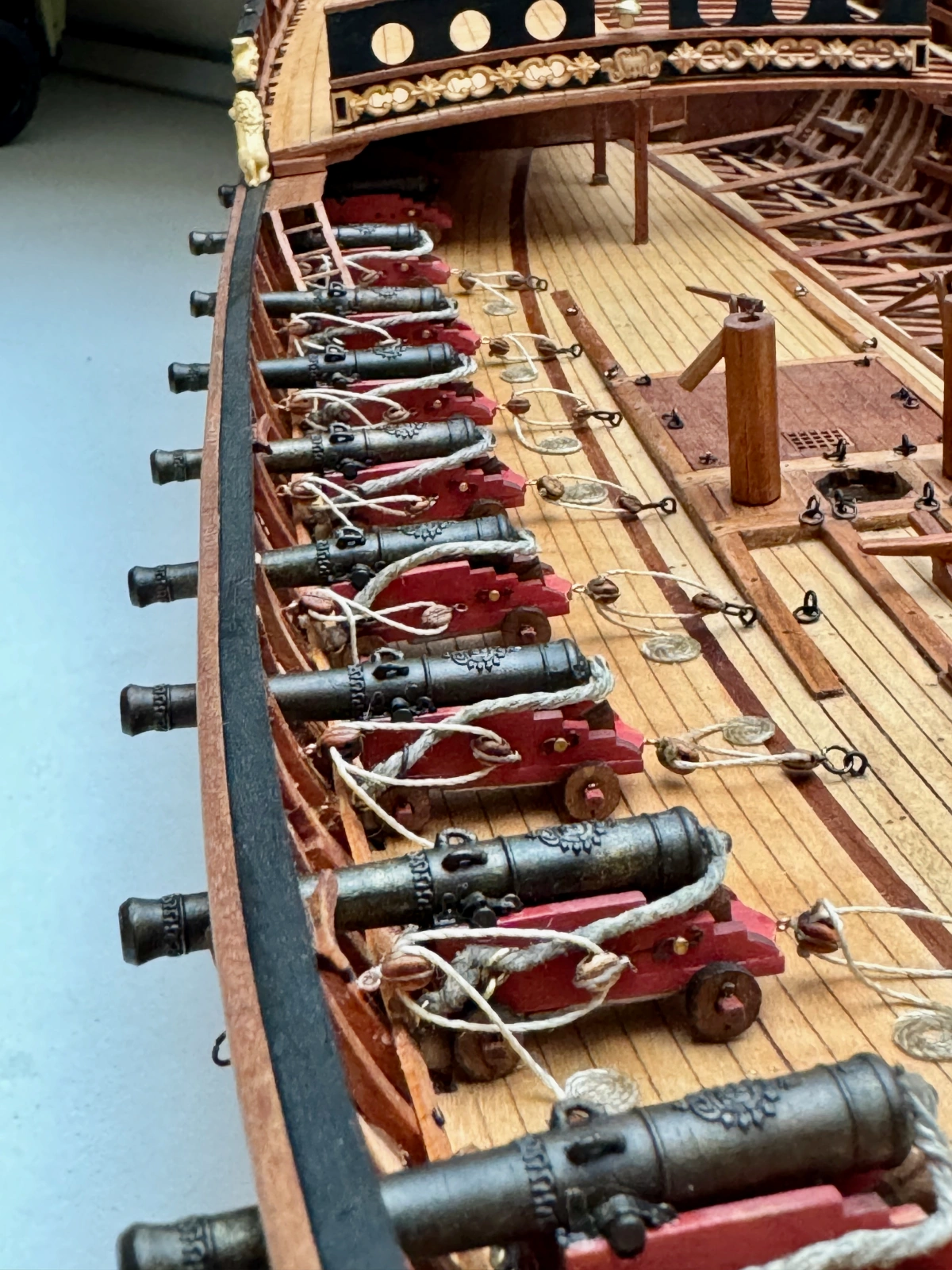
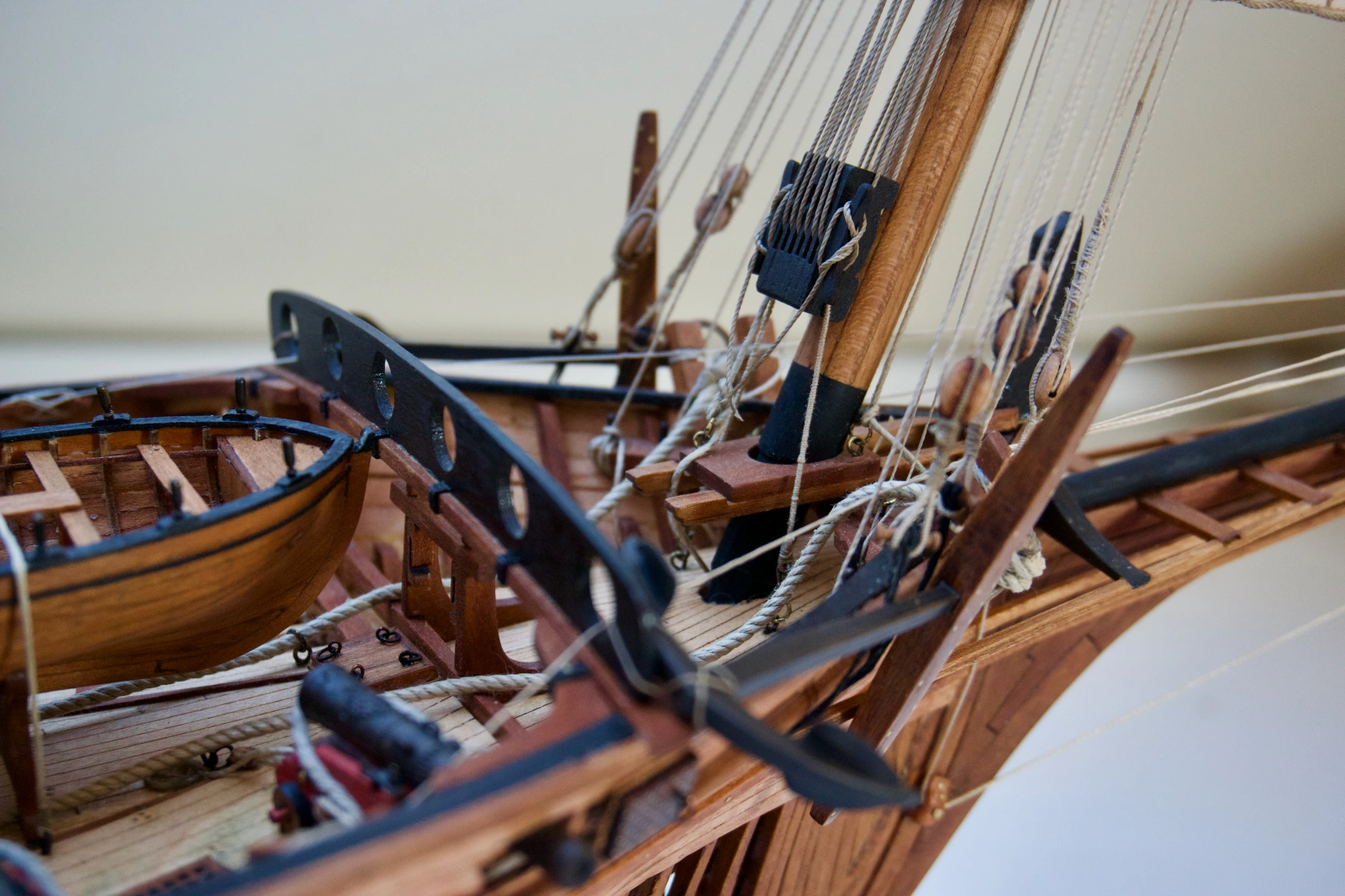
Once the deck is fully prepared, twelve ship’s guns are mounted along the starboard side. Each gun is built up from twenty-four separate components: the carriage with its trucks and trunnion caps, the barrel, and numerous small fittings. After assembly, the carriages are painted, while the barrels are blackened to a deep matte tone to suggest blued iron. The guns are then rigged for action — with gun tackles, recoil tackles, and the heavy breeching rope that checks the gun’s run-out and recoil after firing.

The finishing touch of this stage is the installation of additional deck fittings: pumps, hatches, and the planked platforms around the hatch coamings. These details complete the working environment on deck and underline the character of the xebec as both a fighting ship and an elegant sailing vessel

↑ Back to all parts

Part 4

06.02.2026

The pinnace

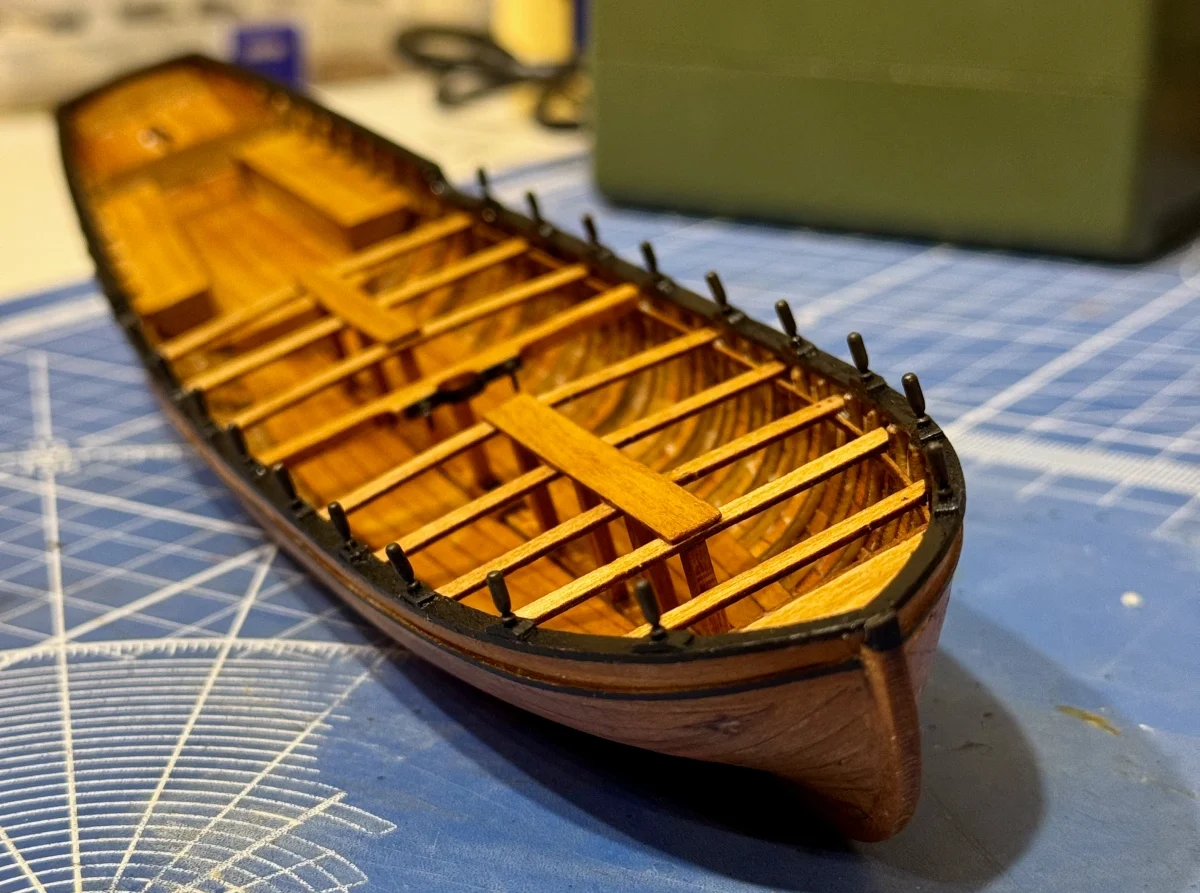
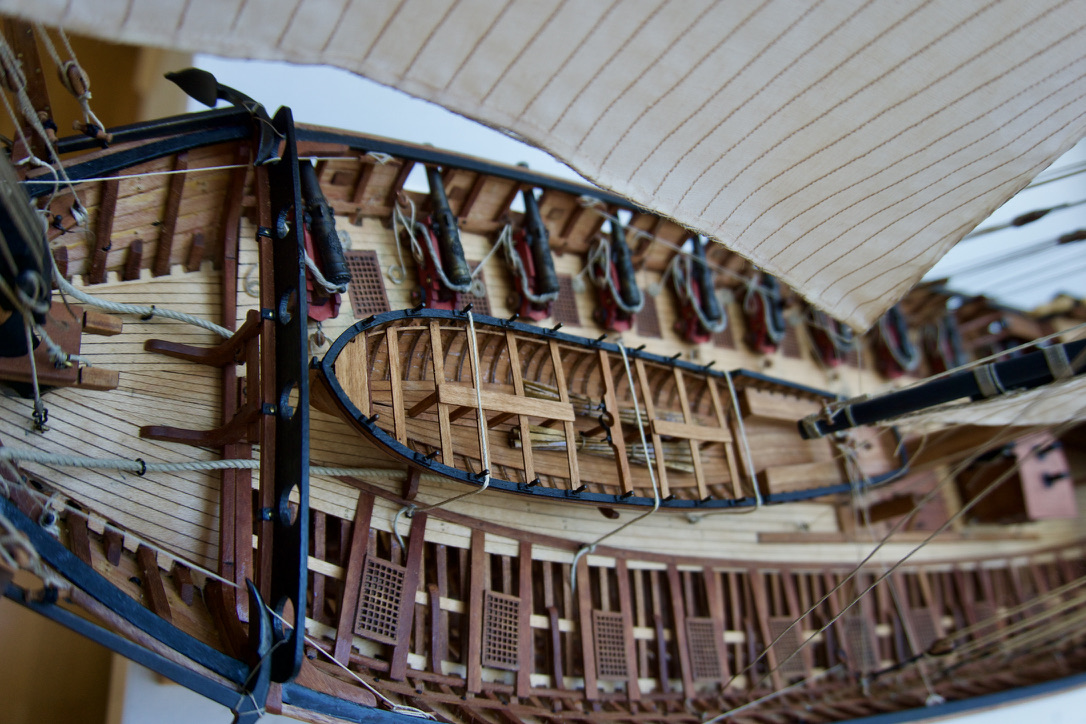
Every ship — except the very smallest ones — carries a boat or two. There are plenty of ways to make a model boat: paint an aluminum casting, carve one from a solid block of wood, build it “sandwich style” from stacked sections, or plank over a balsa core. Quick and inexpensive.

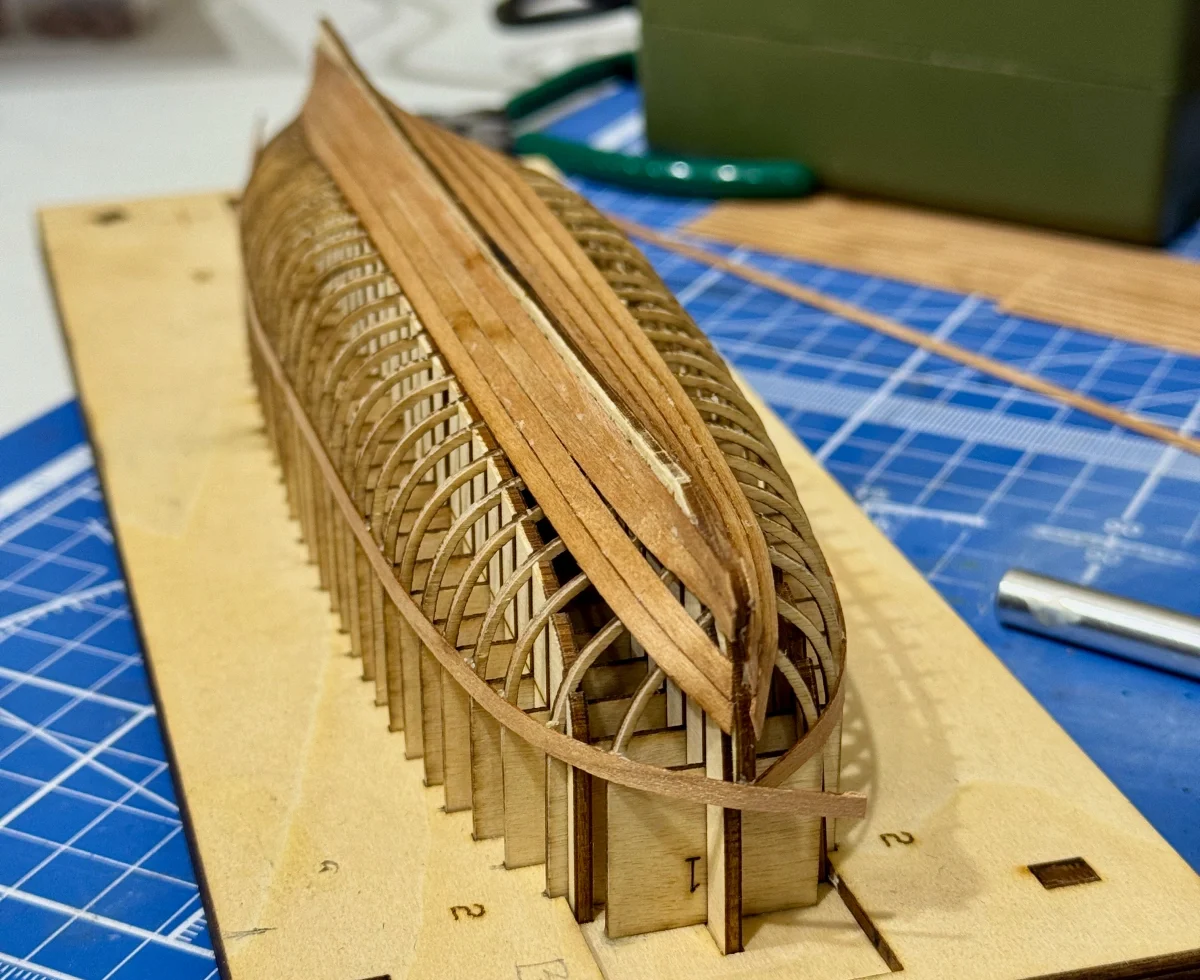
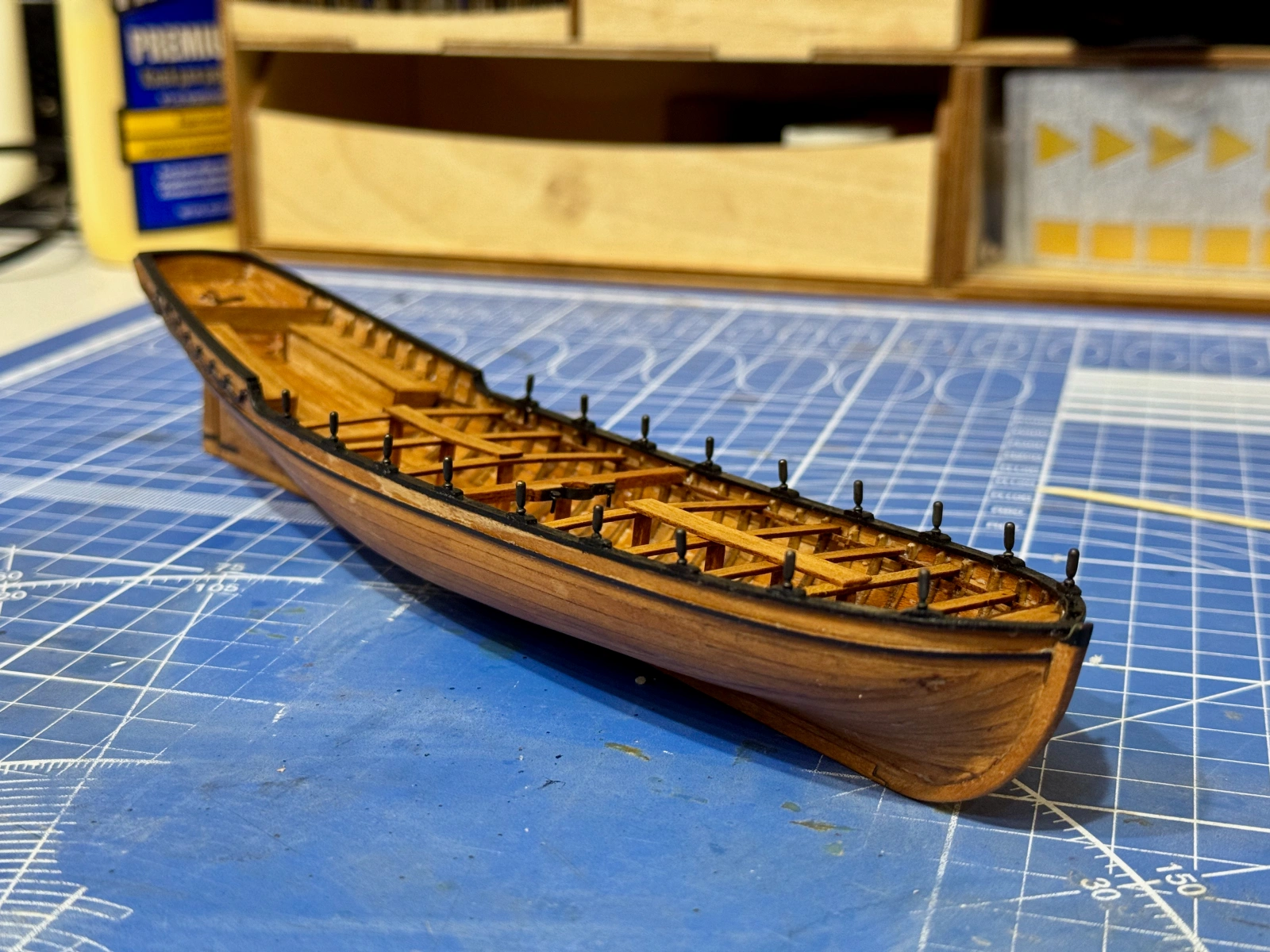
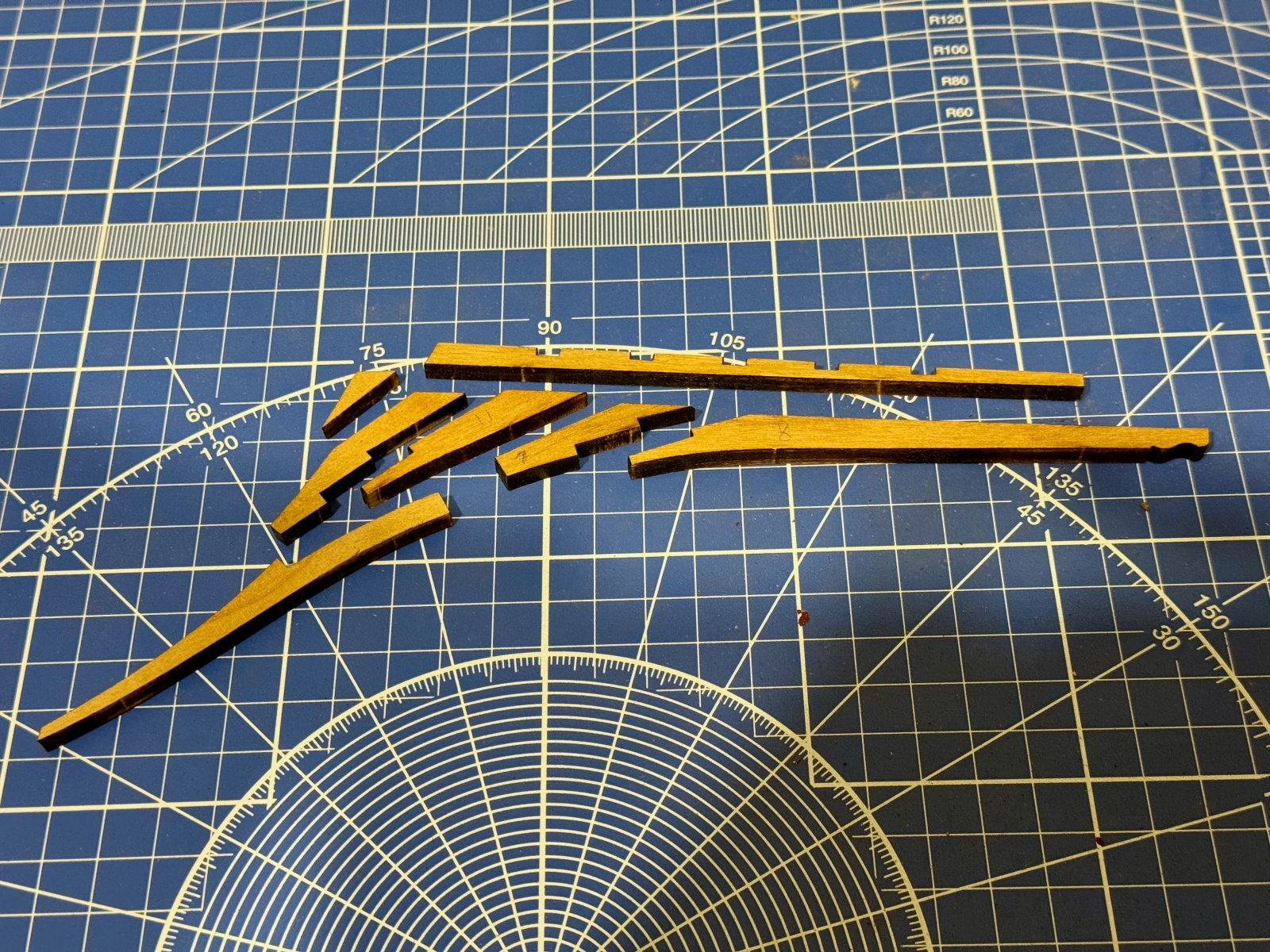
But of course, you can always go further and treat the boat as a miniature ship in its own right: set up a small building slip, assemble keel and frames, plank the hull, fit out the interior, and add all the necessary equipment. That’s the way I always prefer to do it. That’s how it was with Bounty, and that’s how it will be with Le Requin. Especially since, at 1:48 scale, the xebec’s pinnace is over 20 cm long, it really deserves the full treatment. So, we begin with the slipway and setting up the frames on it.

The hull frame with the keel in place is now ready for planking. At this stage you have to go easy, since the planking strips are only 0.6 mm thick and all sanding has to be done with great care.

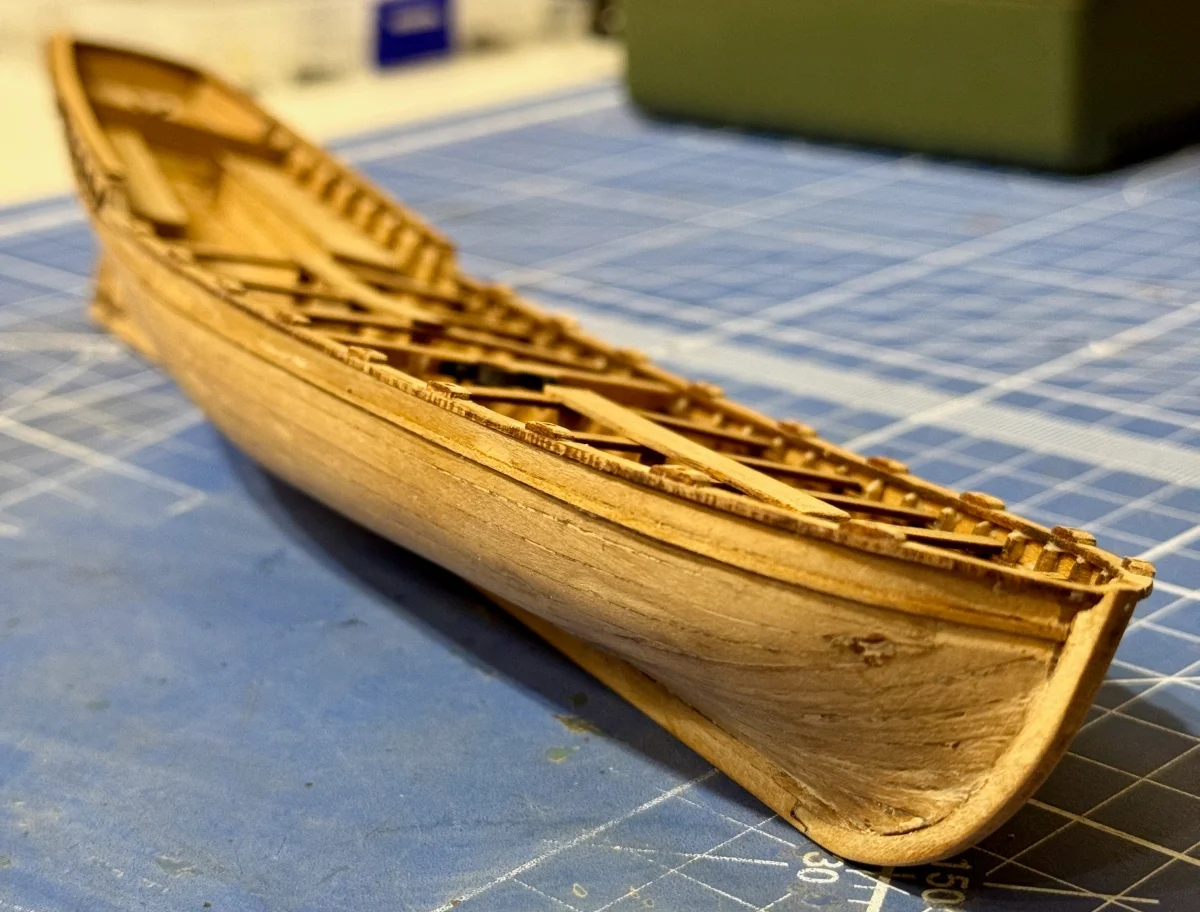
Next up are the interior and the finishing touches. Pinnace complete! She has taken her place on the keel blocks between the main and fore masts.

↑ Back to all parts

Part 5

06.03.2026

Spars and sails

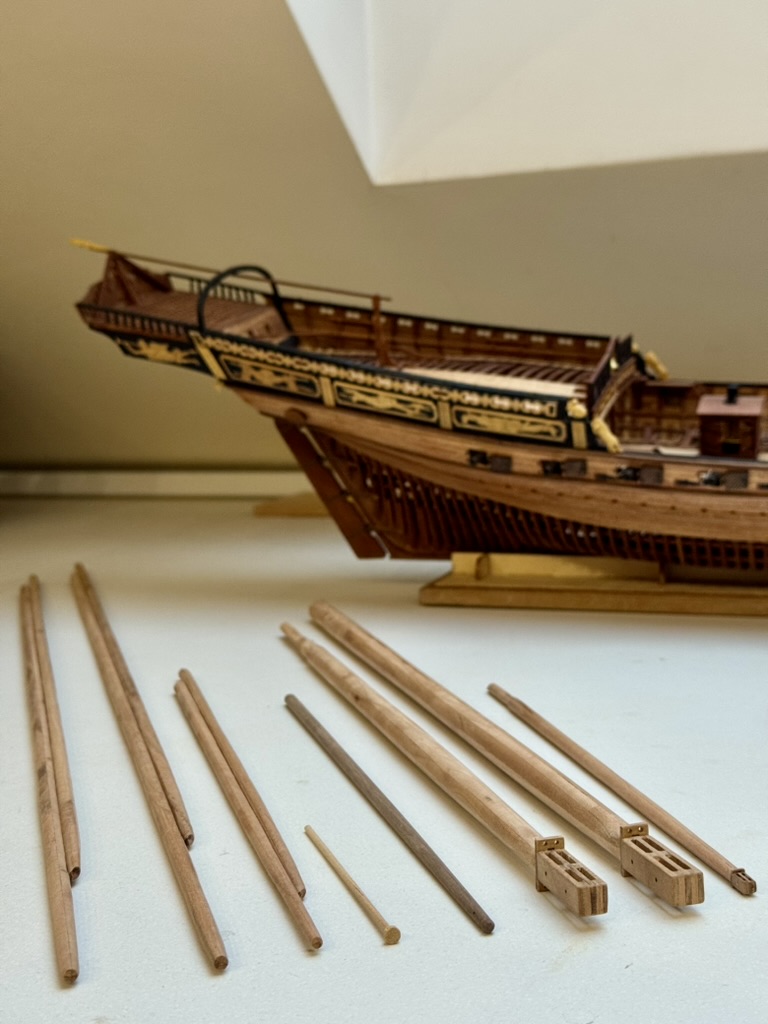
A new chapter in the build — crafting the masts and yards. The work begins with square laminated blanks, gradually shaped with a plane and lathe. Even the lathe needs an upgrade: it was designed for small parts, while these spars reach over half a meter in length. Every large-scale model sets its own rules — tools and techniques evolve right along with the build.

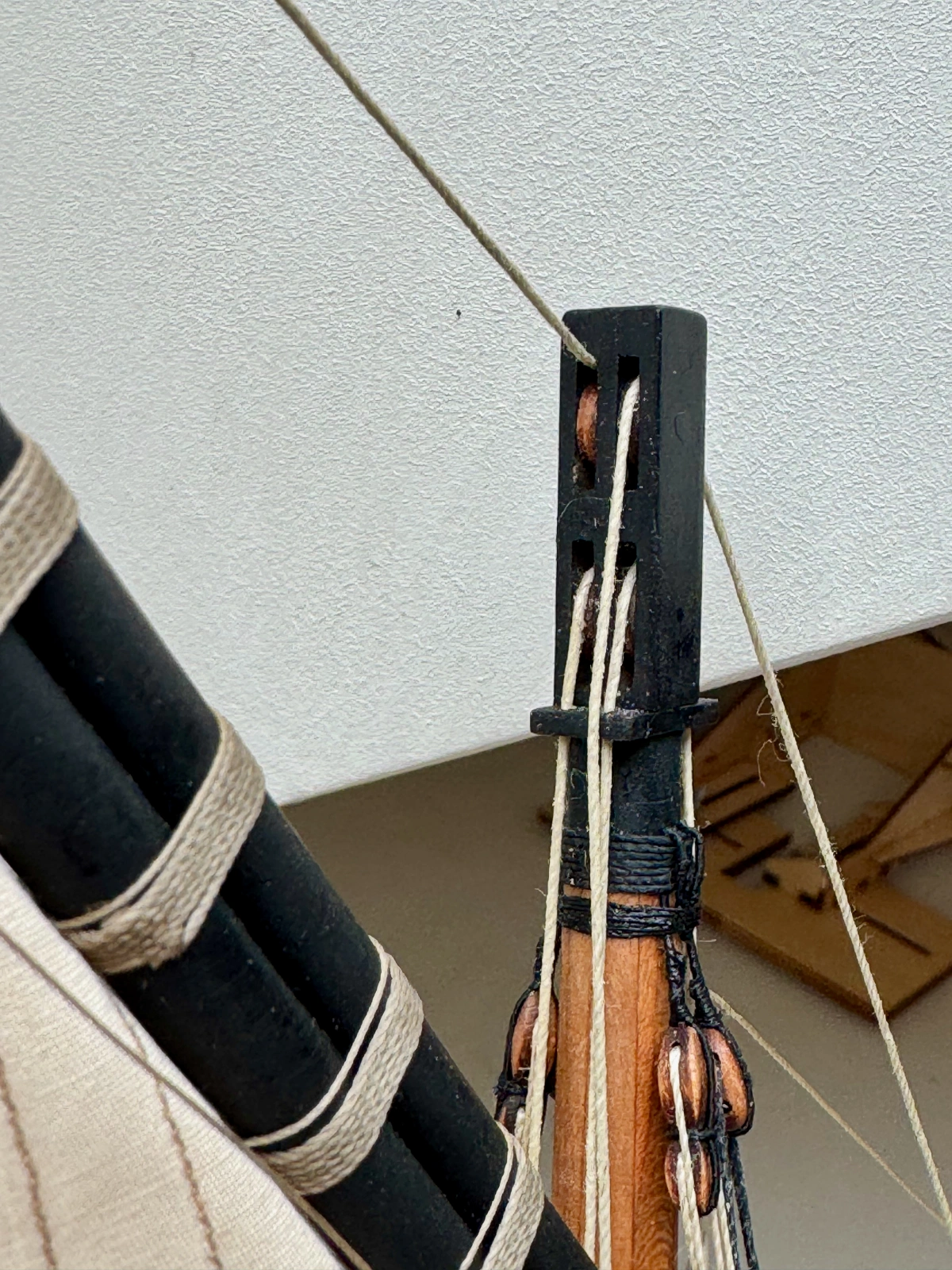
It’s a good time to take a closer look at the rigging arrangement. On war xebecs of the Le Requin type, there are no fully developed topmasts with their own shrouds; the lower shrouds are not tensioned by traditional deadeyes and lanyards but by a system of tackles and blocks. This alone isn’t enough to counter the bending stress from the long lateen yard — its length often exceeds the height of the mast itself. A significant part of the load is carried by the sartis — powerful yard stays that run from the yard ends through the masthead down to the hull. This design allows a smaller number of shrouds and keeps a clear arc for swinging the yard when changing tack.

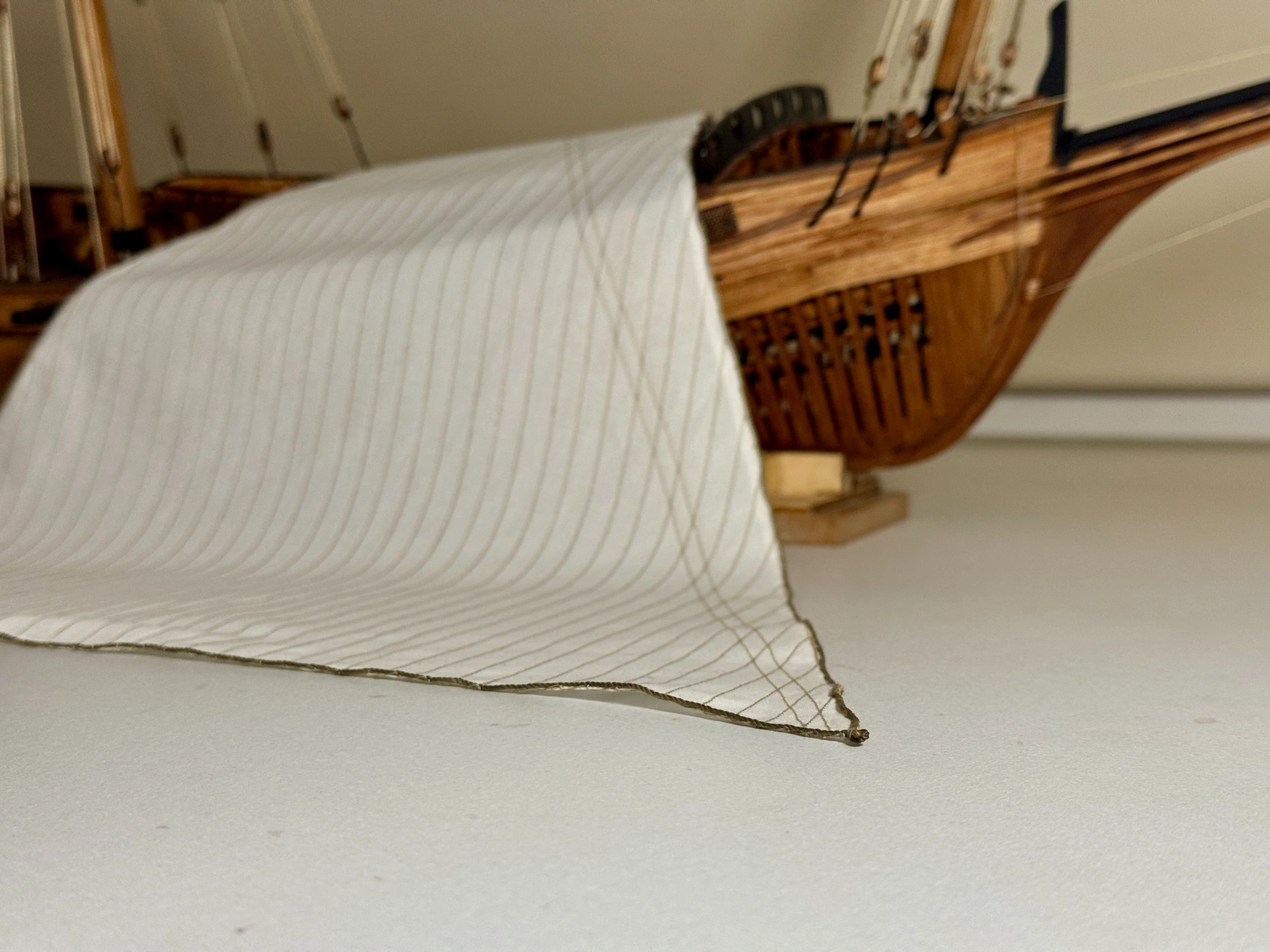
Time to move on to the sails. Le Requin carries three lateen sails, cut from cloth, but all the detailing is still ahead: marking the panel and reef band lines, stitching, sewing on the bolt ropes with cringles, and adding reef points. These steps take patience and precision, but they bring the sails to life with a convincing look. The final touch is to slightly “age” the fabric and give it the right stiffness so that the sails hold their shape realistically.

With the sails in place, the model is nearing completion. Only a few finishing touches remain — anchors with their cables, oar brackets, and the pinnace oars. These small details complete the character of the ship, bringing to life the elegant silhouette of an eighteenth‑century French xebec.

↑ Back to all parts

Part 6

26.03.2026

Final touches

The final touches are always the most delicate. It’s frustrating to make a mistake at the very last stage — to bump into something or accidentally damage the work. Fortunately, this time everything went smoothly. The anchor cables are laid exactly as they should be. The shebec’s oars are partly secured on their brackets behind the bulwarks and partly arranged on the quarterdeck. The pinnace oars are placed inside the boat, and the pinnace itself is firmly fixed on deck.

↑ Back to all parts

Project Specs

Model
Le Requin
Scale
1:48
Manufacturer
ZHL Model
Length
1200 mm
Historical Year
1750
Total Parts
6
Status
completed