
Workplace
Let us talk about the purpose of having a separate workspace and the conditions that need to be met to make it work. In my view, the main goal of a workspace is to make the building process comfortable both for the modeler and for everyone around them — family, friends, cats, dogs, fish, parrots, and the list is not exhaustive. A workspace can be either mobile or stationary, depending on the situation, so let us define what that “comfortable process” actually means.
- Space. You need enough room for the model itself, the necessary tools, and the materials. There is never really too much space, but at the very least you need a table about 1 meter wide and 60 cm deep, and preferably larger.
- Lighting. Modeling involves lots of small parts and fine work where tenths of a millimeter matter. That is why the workspace must be well lit. If you use a desk lamp, it should be adjustable so you can direct the light exactly where it is needed.
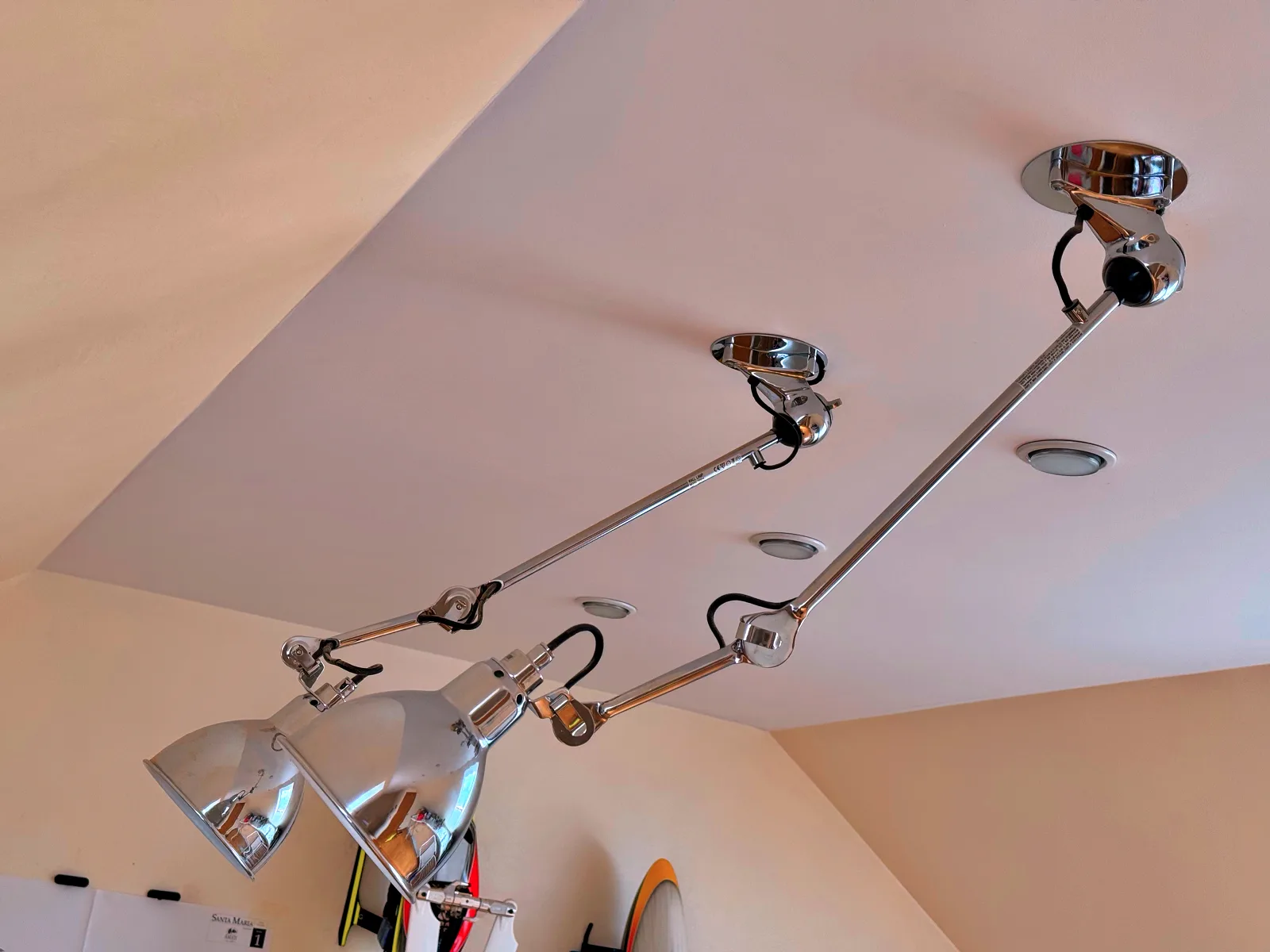
- Sound isolation and ventilation. No matter how careful you are, building a model is a fairly noisy process, and many materials have a smell, especially paints and varnishes. Try to set up your workspace in an isolated room if possible, or at least take the interests of those around you into account when planning noisy work. Painting is best done under extraction, especially with an airbrush, because aerosol particles have a habit of settling in the most unexpected places.
- Storage. Every tool and material should have its own place. Only what you are actively using should stay in the work area. If your workspace is mobile, the storage system has to be portable as well.
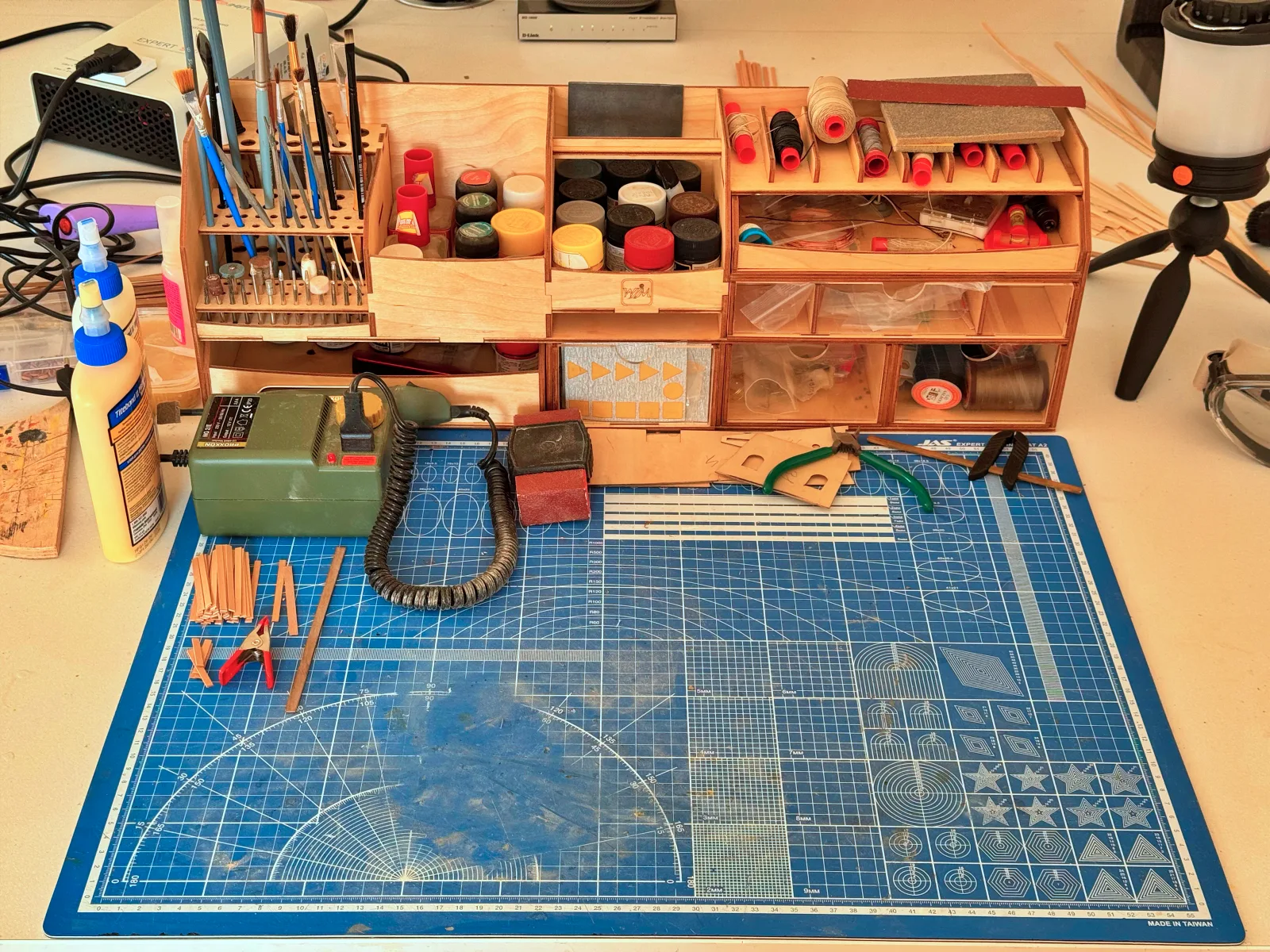
And above all, safety matters. Everything listed above is important first of all for safe work. Do not forget about protective equipment such as safety glasses, gloves, and a respirator. Always read the instructions before using a tool, and when working with power tools, make sure sockets and cords are in good condition. Even a hobby-grade machine tool can be genuinely dangerous if used improperly.